
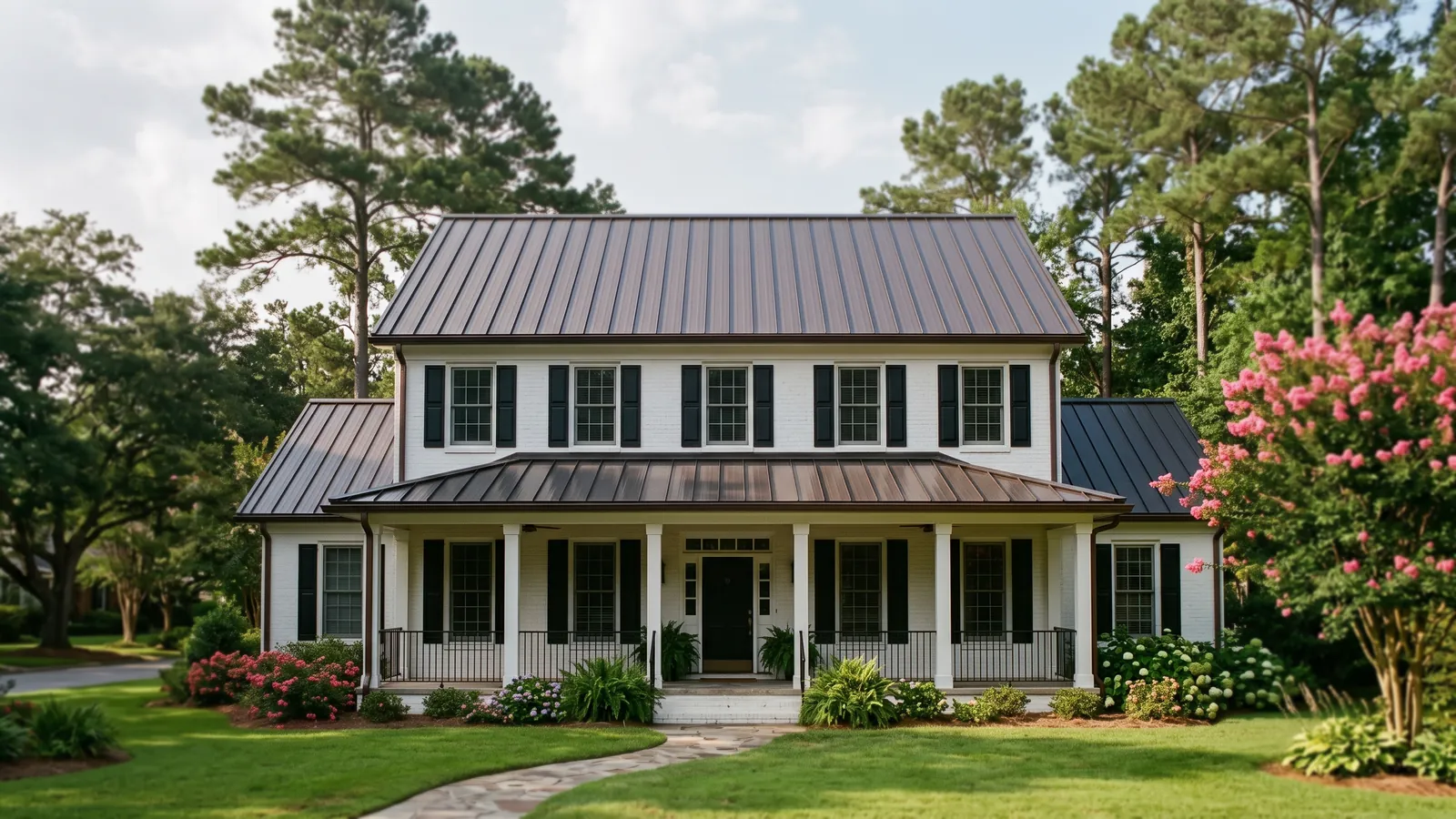
Copper and Zinc Roofing Work, From Full Roofs to Accents
At copper prices, the usual move is to put it where a few hundred square feet changes how the house looks: a porch, a bay, a dormer. Each type below is a different trade detail, and a bid should name which one you're getting.
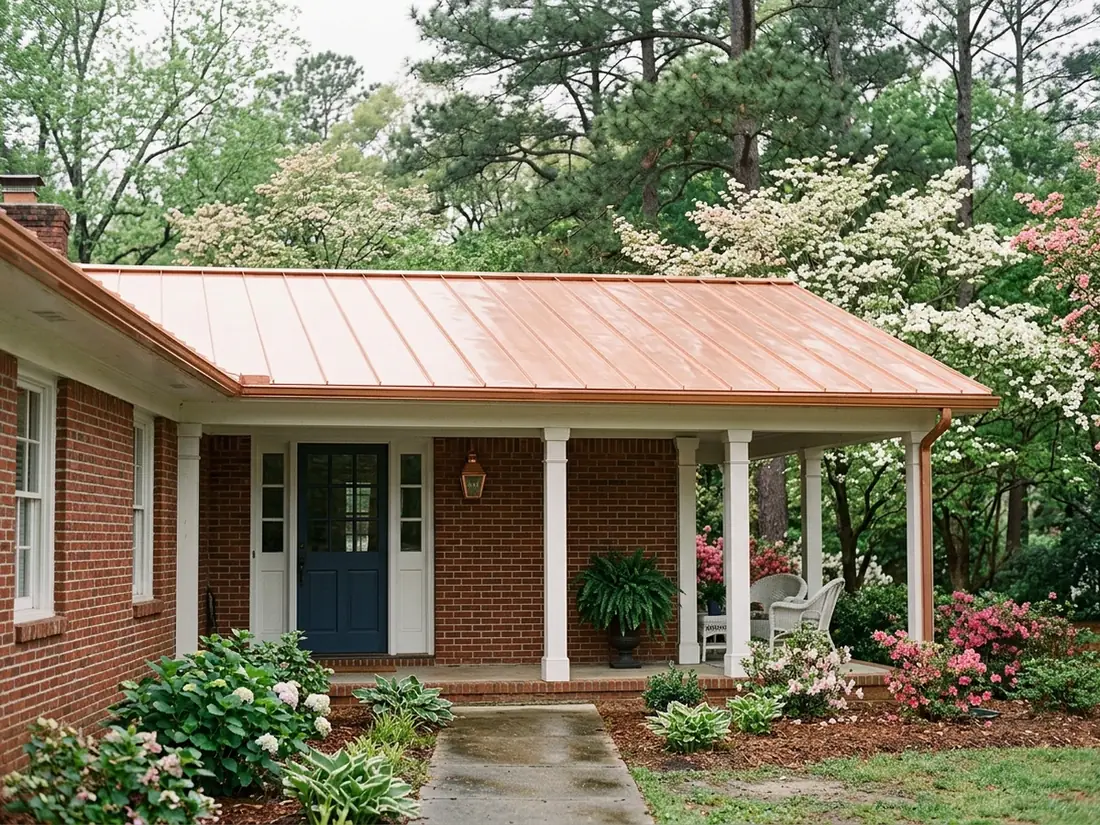
Copper Standing Seam
Long copper pans run from eave to ridge with their edges folded up into raised seams. Copper cleats hidden in the seams hold the pans down while letting them move as the metal heats and cools. Long pans need expansion cleats, which the Copper Development Association's handbook says allow up to ¾ inch of movement. The handbook works in 16- and 20-ounce cold-rolled copper. The code requires copper, brass, bronze or 300-series stainless fasteners on a copper roof, never galvanized steel. National guides put copper panel material at $14 to $22 per square foot before labor, and a full copper roof at $13 to $30 per square foot installed.
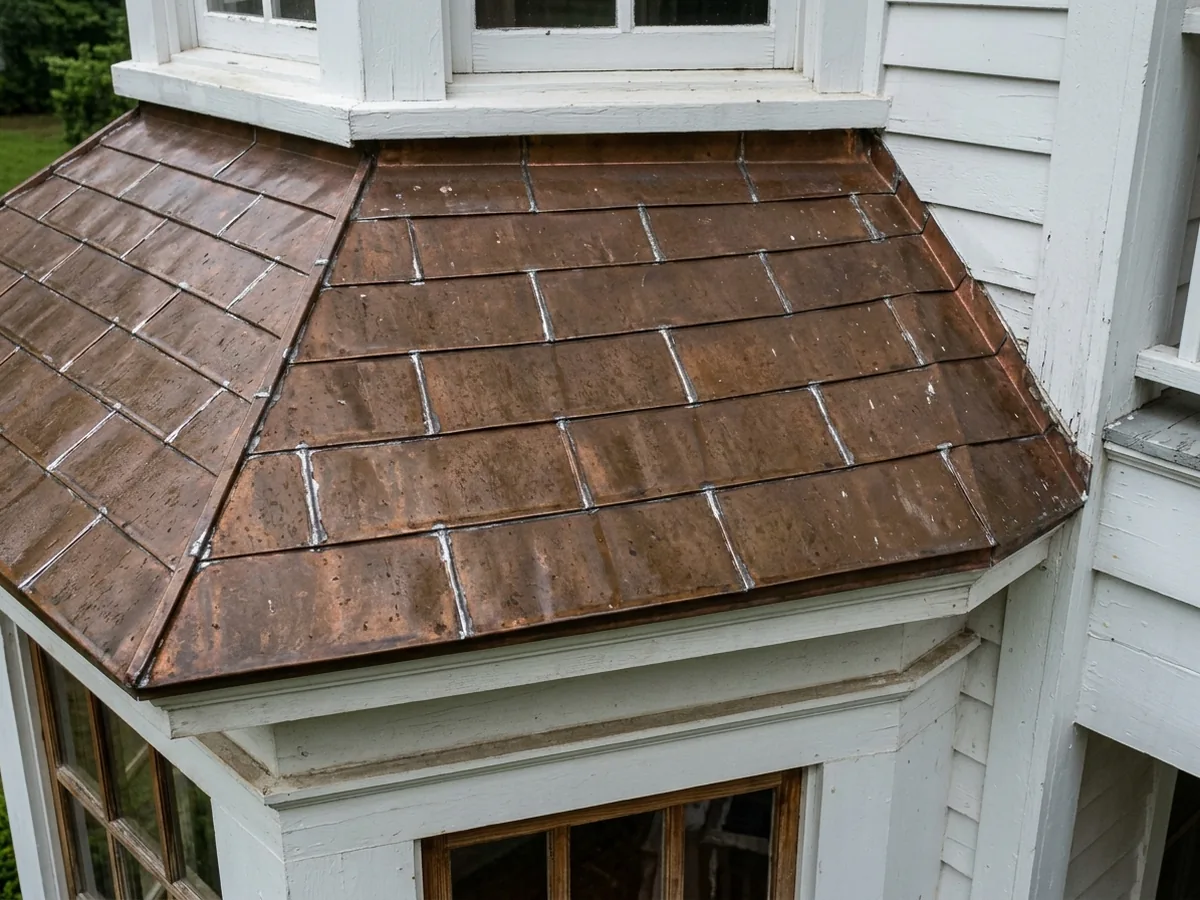
Flat-Seam Copper
Flat seam is the one copper detail meant for nearly flat roofs. The handbook builds it from 18-by-24-inch sheets of 20-ounce copper with ¾-inch folded locks on all four sides, staggered like brick. Where the slope is 3:12 or less, every seam is soldered. It's the only copper method the handbook treats as fully watertight, able to hold standing water. That makes it the copper choice for low bay roofs and other shallow spots. For the panel options that work on shallow pitches in other metals, see low slope metal roof.
Copper Shingles
Copper shingles are press-formed pieces that interlock in courses like slate. Preformed copper shingle systems can be 12-ounce copper under the code. Material runs about $9 to $16 per square foot. Shingles need less cutting than panels, which keeps labor down. Copper shingles are rated for a shorter life than panels: about 40 years for shingles against 50 or more for panels, according to the same cost guide.
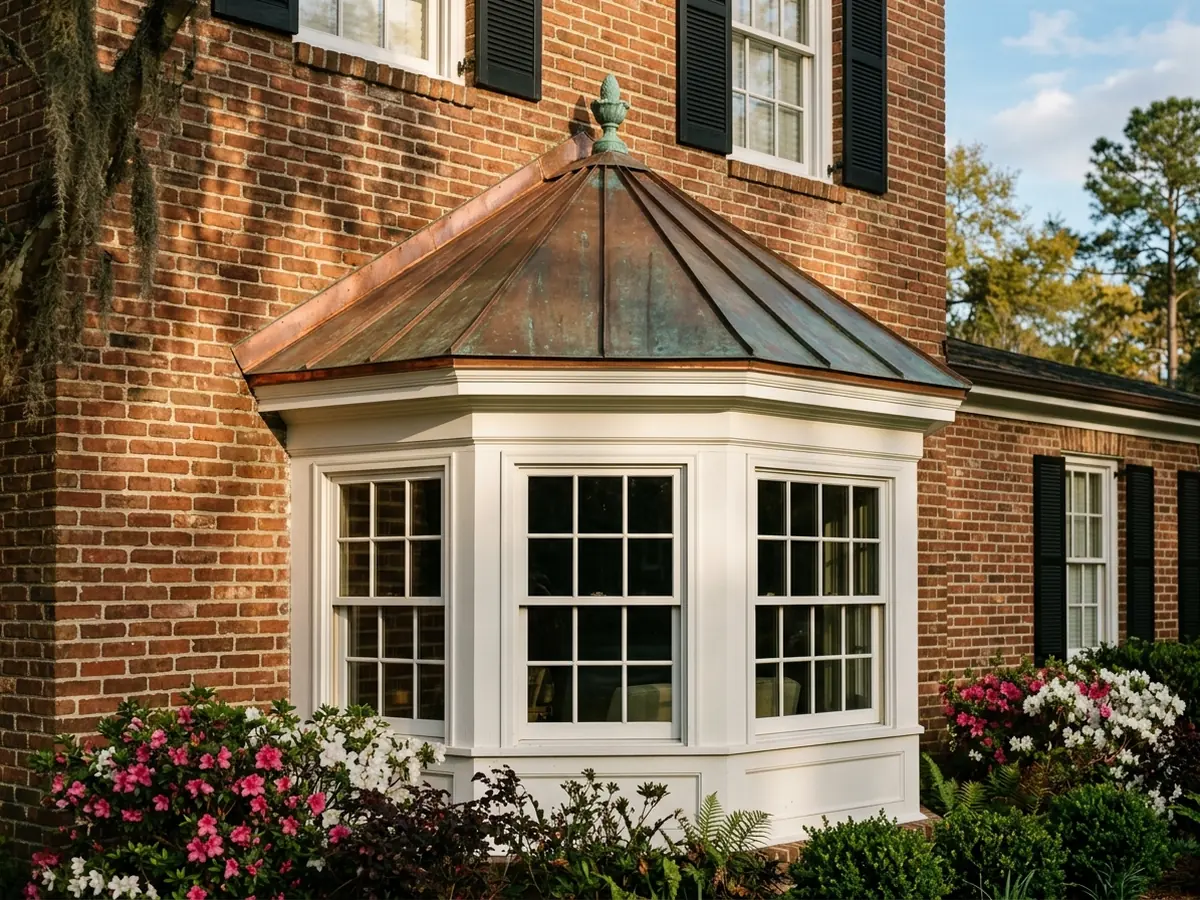
Copper Accents: Bays, Dormers and Cupolas
Accent roofs are where copper's price makes the most sense. Typical jobs are a bay window cap, a dormer roof, a cupola, an entry hood or a porch over the front steps. A copper porch roof runs about $2,000 to $6,000 depending on size. Small accent roofs come down to soldering and edge details more than square footage, so ask to see photos of soldered seams the crew has done. For porch roofs in steel, aluminum or copper, see metal porch roof.
Zinc
The code calls for 0.027-inch minimum zinc of 99.995% electrolytic high-grade metal, alloyed with small amounts of copper, titanium and aluminum. National guides put zinc at $1,000 to $2,000 per roofing square installed and quote an 80- to 100-year life. Zinc is one of the metals copper attacks, so a zinc roof should never sit below copper flashing or take its runoff.
Why Columbia homeowners call Columbia Metal Roofs
- A free on-site measure and a written quote
- Panel type, steel gauge and paint system spelled out before you sign
- Ask who pulls the roofing permit: it goes in the scope
- Your request goes to one independent metal roofer, not a list
- No fee to the property owner for the referral
Copper Roofing Beside Steel, Aluminum and Zinc
This is the detail that ruins mixed-metal jobs. The Metal Construction Association's bulletin on dissimilar metals says copper does fine against lead or stainless steel but has "a very severe corrosive effect on steel, aluminum, and zinc." Two metals don't even have to touch. Rain running off a copper roof onto a Galvalume roof, or onto an aluminum gutter, carries copper salts that stain and corrode the lower metal.
On a Columbia house that usually means:
Copper above a steel roof
A copper bay or dormer roof that drains onto a painted steel main roof needs its water carried away in copper, not dumped on the steel.Copper over aluminum gutters
Copper runoff into standard aluminum gutters attacks them. Copper roofs drain into copper gutters. See metal roof gutters.Copper flashing on a steel roof
Even a short piece of copper at a chimney or wall puts copper salts on the panels below it. On a steel or aluminum roof, flashing should match the roof metal.Treated lumber
Pressure-treated wood carries copper-based chemicals. The bulletin says to keep it away from every roof metal except copper and certain stainless steels.AC condensate
Condensate dripping from equipment onto a coated steel roof acts as a stronger electrolyte than rain. Plumb it to a drain.
Copper Roofing Patina Over the Years
New copper is salmon-red. It darkens to brown and, over time, to the familiar gray-green. The CDA handbook explains that the green layer forms when acidic moisture in the air reacts with the copper. Once formed, it sticks tightly and protects the metal from more weathering. The process runs faster in polluted city air and near the sea. National cost guides put a light blue-green patina at 10 to 20 years, uneven at first across a roof.
You have three choices. You can let it weather naturally. You can have the copper chemically pre-aged, which gives a patina look in a day or two. Or you can keep the bright copper color with a clear coat made for copper. Pick before the job. A pre-patinated bay next to a bright new gutter looks like two jobs.
Copper Roofing Bids: Line Items Worth Comparing
Weight
16 or 20 ounce, written on the bid. Twenty-ounce is the handbook's weight for flat-seam sheets.Seam method
Standing, batten or flat seam, and whether flat seams are soldered or sealed.Cleats and fasteners
Copper cleats, plus copper, brass, bronze or stainless fasteners. Anything galvanized near copper is a red flag.Expansion
Copper moves with temperature. Ask how long pans and gutters are jointed to allow for it.Underlayment
What goes under the copper, and whether it can breathe so moisture doesn't sit against the metal.Drainage path
Where the copper's water goes, and what metal it lands on.Finish plan
Natural, pre-patinated or clear-coated, and the same choice for gutters and trim.