
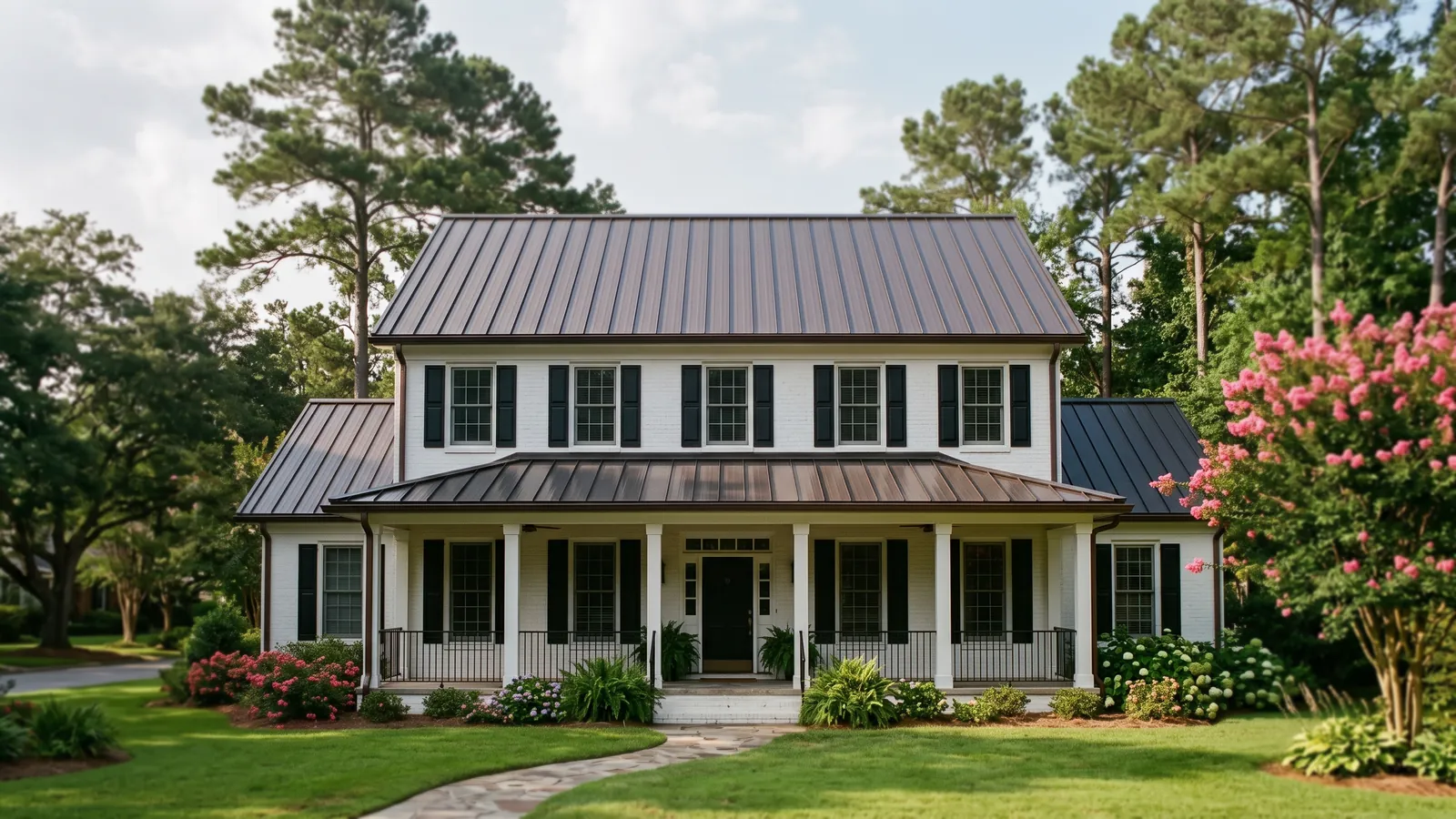
Metal Roof Inspection and Maintenance, Item by Item
An inspection finds problems. When something is already leaking, the job is metal roof repair, and that page covers the storm record for Columbia.
Spring, Fall and After-Storm Inspections
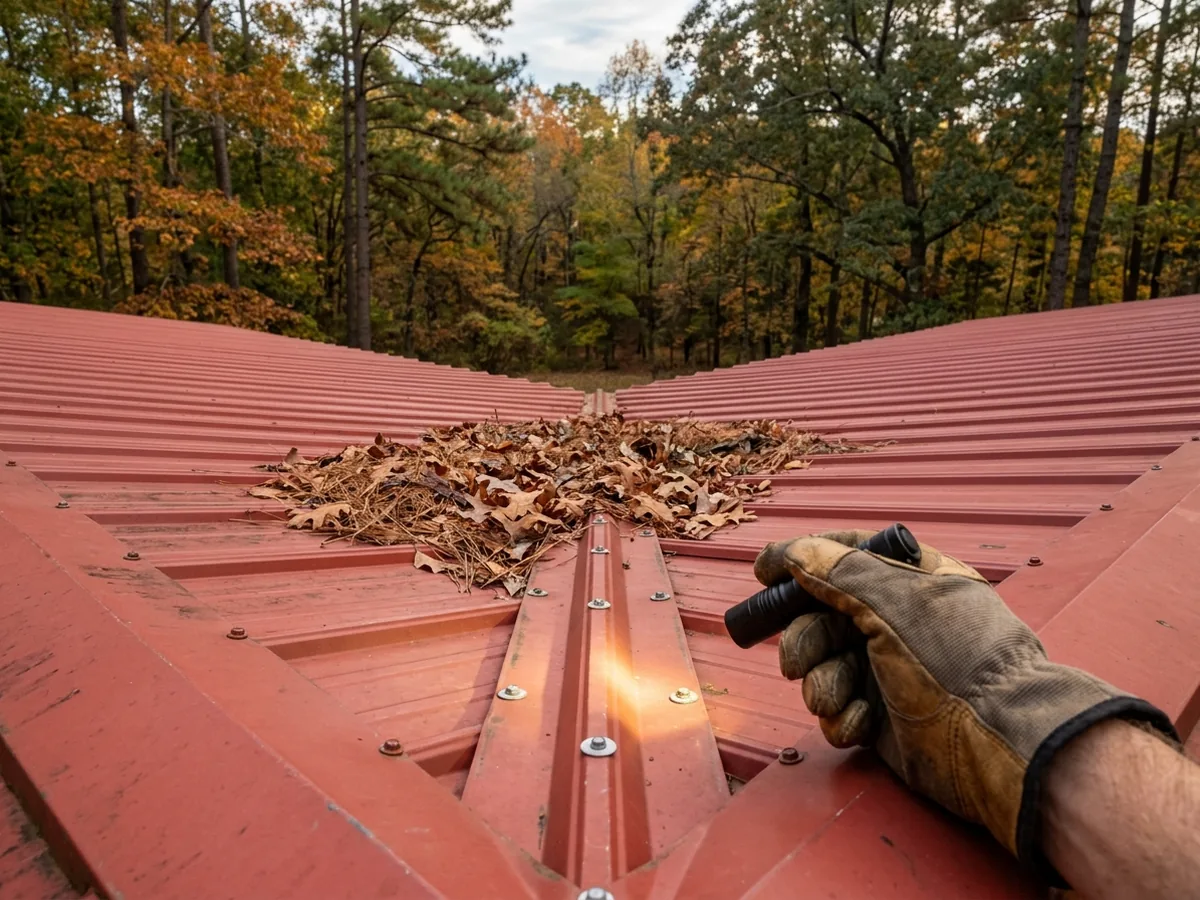
NRCA's twice-a-year schedule fits the Midlands calendar well. The Atlantic hurricane season runs from June 1 to November 30, so a spring visit checks the roof before the tropical-storm months, and a fall visit catches what the summer storms loosened and clears the first leaf and pine-needle drop. Book an extra look after any storm that brought down limbs or hail. On a steep roof, NRCA says a maintenance check can often be done from the ground or from a ladder at the edge. It does not recommend homeowners walk on roofs without the experience and equipment to do it safely.
Fastener and Washer Check
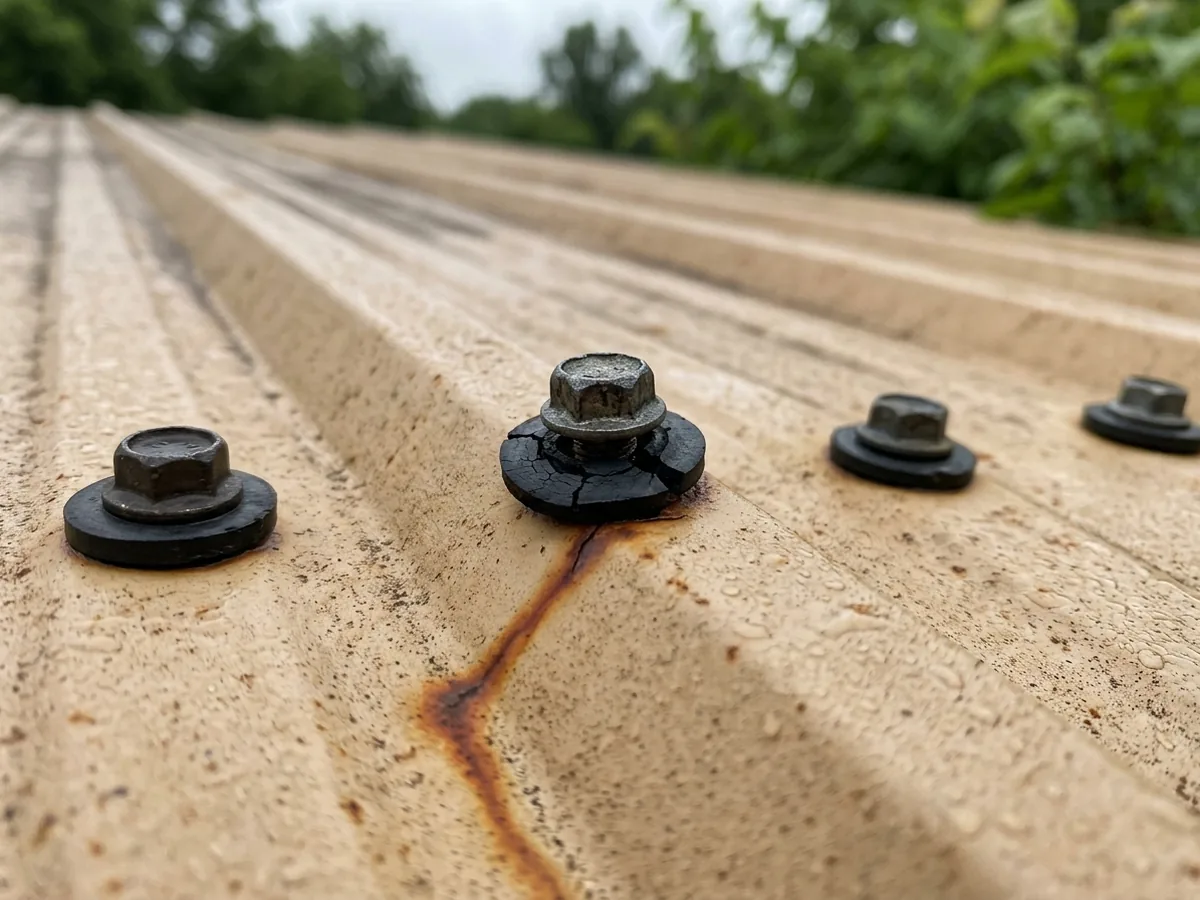
On exposed-fastener panels, every screw is a possible leak. The roofer looks for screws that have backed out, washers that are cracked, flattened or missing, and rust streaks running downhill from a screw head. Worn screws get swapped for oversize ones during a coating job, since the old hole is already enlarged. On standing seam the panel clips are hidden, so the check moves to trim screws, seam ends and the ridge. How often a screw-down roof needs a full re-screw is covered on our corrugated metal roofing page.
Sealant and Flashing Check
The Metal Construction Association (MCA) installation manual says most leaks start at complicated flashing transitions, changes in slope, dead-end valleys and pipe penetrations. That is where an inspection spends its time: pipe boots, sealant at panel end laps and under ridge and wall flashing, chimney and skylight flashing, and the closure strips at the eave and ridge. Dried, split or pulled-away sealant gets cleaned out and replaced, not smeared over.
Debris and Gutter Clearing
NRCA singles out valleys, gutters and drains as the places debris collects. The MCA explains why that matters on metal in particular: leaves and dirt left on panels hold moisture and speed up corrosion, and screws or clips dropped into gutters rust and can jam the downspouts. Look out for metal shavings too. Bits of steel left behind after a satellite dish, solar or repair job rust quickly in rain, dew and humidity, and they stain or damage the panel under them. A good inspection sweeps these off and flushes the downspouts.
Coating and Paint Check
Painted steel chalks as the resin in the paint breaks down in UV light, leaving a white powder. As the resin goes, the pigment loses its grip on the film and washes away. The roofer checks for chalking, scratches down to bare metal, and, on coated roofs, peeling or thin spots. The MCA cautions that touch-up paint is often a different resin from the factory finish and weathers differently, so it should be kept to real scratches. When the whole finish is going, see metal roof coating and painting.
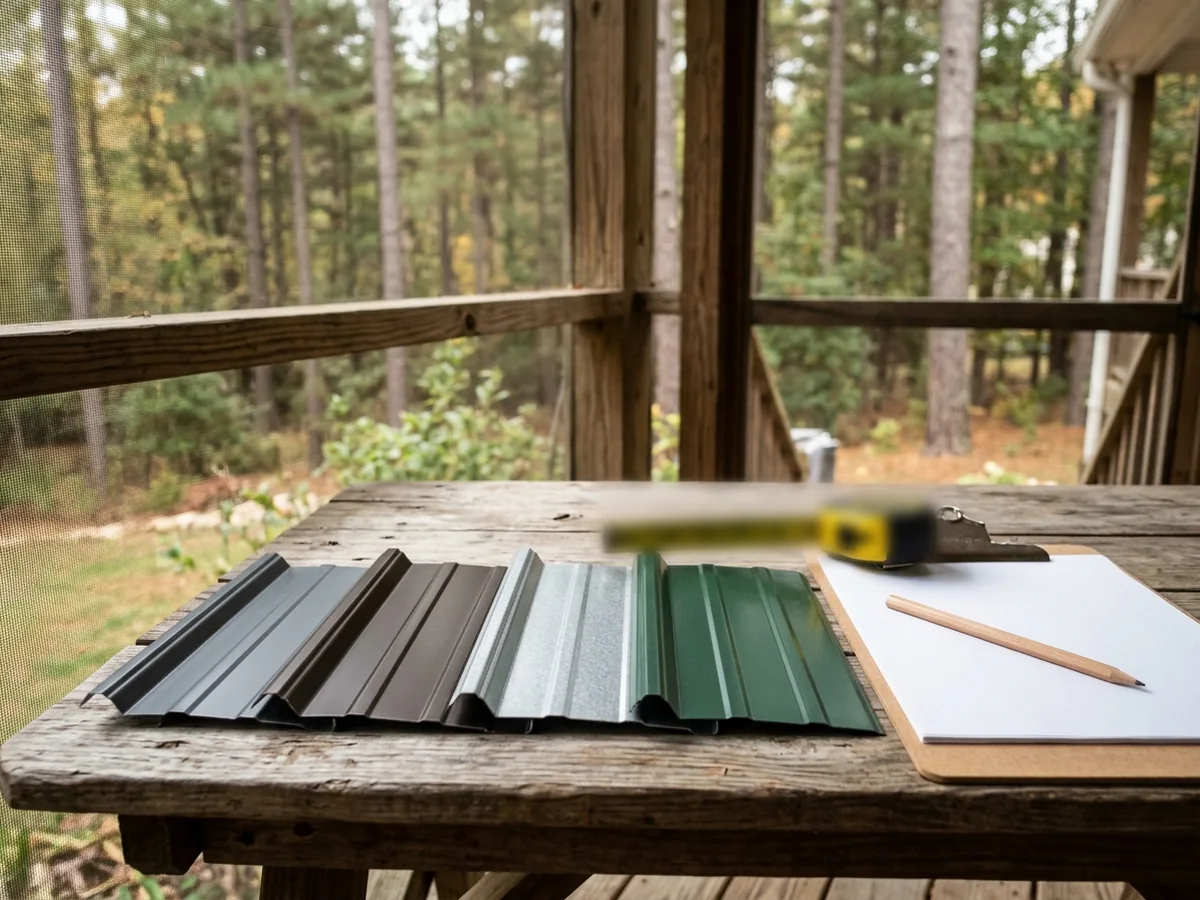
Why Columbia homeowners call Columbia Metal Roofs
- A free on-site measure and a written quote
- Panel type, steel gauge and paint system spelled out before you sign
- Ask who pulls the roofing permit: it goes in the scope
- Your request goes to one independent metal roofer, not a list
- No fee to the property owner for the referral
Metal Roof Inspection Report: What You Should Get
A visit is only as useful as what is written down afterwards. Ask for:
Photos
Each problem photographed, with where it is on the roof.Fix now or watch
What needs repair now and what can wait until the next visit.Work done on the visit
Washers replaced, sealant redone, debris cleared, with the count.Price for the rest
A separate written price for any repair not done that day.
Keep these reports together. NRCA advises owners to file job records and log maintenance as it happens. Its residential guidance also points out that most roofing warranties require the roof to be properly maintained. If you ever need to claim on a panel or paint warranty, a file of dated inspection reports is your evidence.
Metal Roof Inspection Findings That Aren't Leaks
Some things an inspection turns up look alarming but are a different problem from a leak. Knowing which is which saves money:
Drips in the attic on cool, humid mornings
This can be condensation forming under the roof deck, not rain getting in. The fix is underlayment and ventilation, not sealant. Our metal roof installation page covers condensation under metal.Small dents after hail
A dent in a panel is not always a hole. Whether the panel was rated for impact is explained on the stone-coated steel roofing page, which covers impact ratings.Waviness in flat panels
Visible ripples in standing seam pans, called oil canning, are mostly about looks. The standing seam page explains the cause and when it matters.Rust spots on an otherwise sound panel
Look for leftover metal shavings first. The MCA notes that steel bits left on a roof rust quickly once rain, dew or humidity reaches them, staining the finish around them.
Metal Roof Maintenance Between Inspections
Most of what a homeowner can do happens from the ground or inside the house:
STEP 01
Look after big storms
From the yard, look for lifted panel edges, bent trim and missing ridge cap.STEP 02
Check the attic after heavy rain
Water stains on the underside of the deck or on rafters, especially near pipes and chimneys, point to the flashing.STEP 03
Write down when a leak shows
NRCA suggests noting heavy or light rain, wind direction, temperature and time of year. A leak that only appears in wind-driven rain from one direction narrows the search fast.STEP 04
Keep branches off
Limbs that rub on panels wear through paint, and they drop leaves into valleys.STEP 05
Stay off the panels
If someone must walk the roof, the MCA says to step in the flat of the panel between ribs and close to the framing below. Ask any satellite or solar installer to work that way and clean up their shavings.