
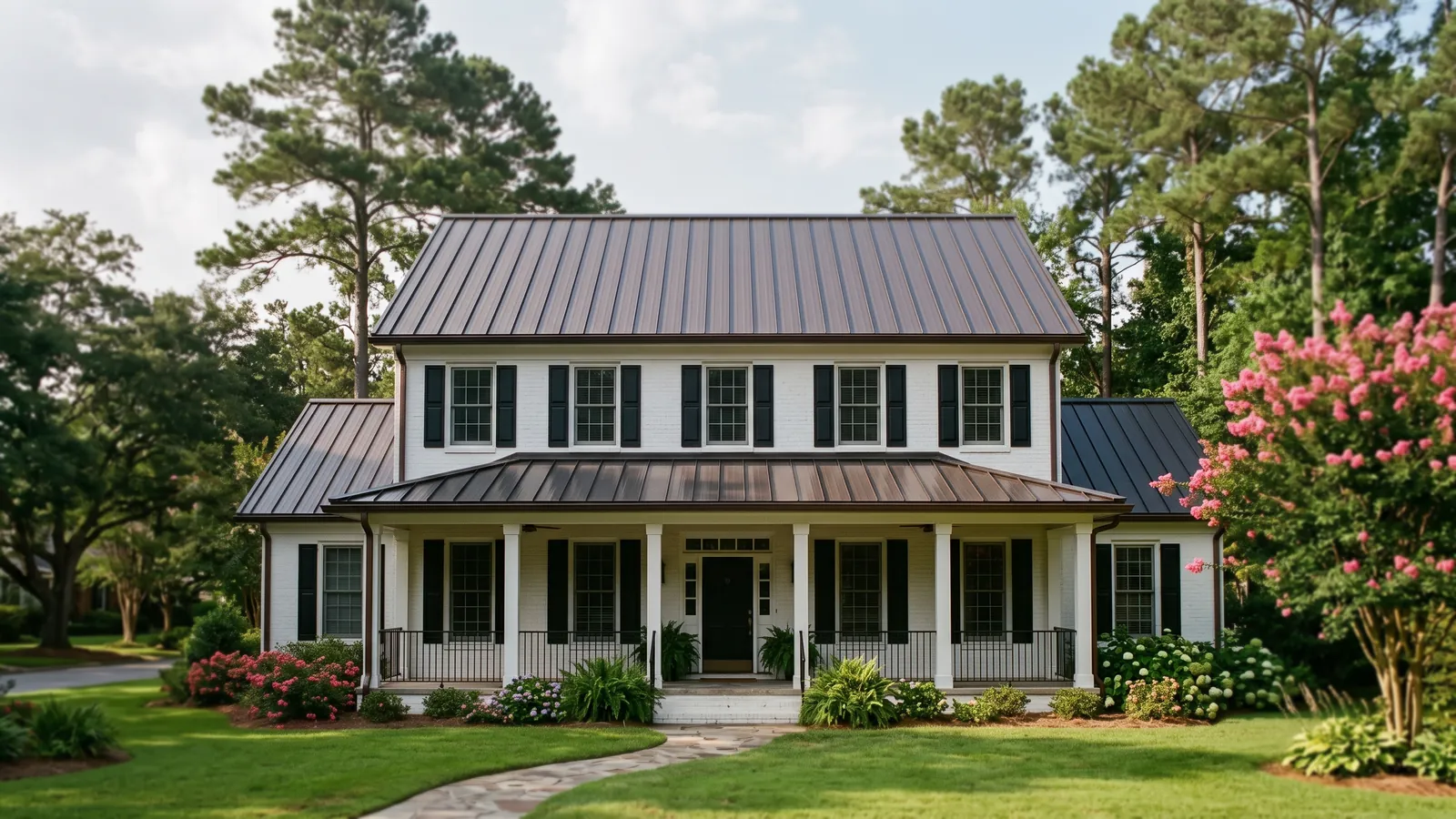
Stone-Coated Steel Roofing Profiles and How They Go On
The profile decides the look from the street. The fastening method decides how the roof handles dormers, valleys and an old roof left in place. One maker, DECRA, sells its scalloped tile and classic shake on battens and its barrel tile, shingle and newer shake lines direct to the deck, so the two choices are tied together more often than people expect.
Shake Profile
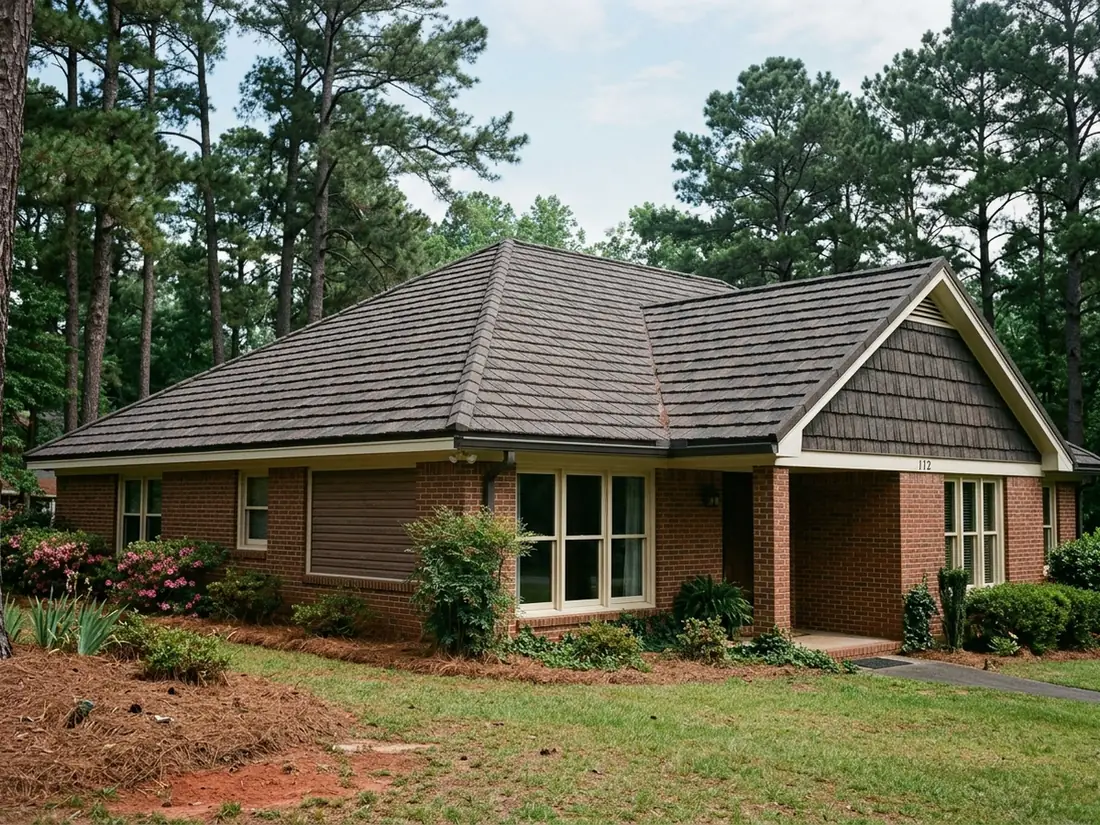
Shake panels copy the uneven butt edges and deep shadow lines of split cedar. On a brick ranch or a 1970s split-level they read as wood from the curb, without cedar's rot. Shake comes in both batten and direct-to-deck versions, so ask which one the bid is for. The two lines are fastened differently and priced differently.
Barrel and Scalloped Tile Profiles
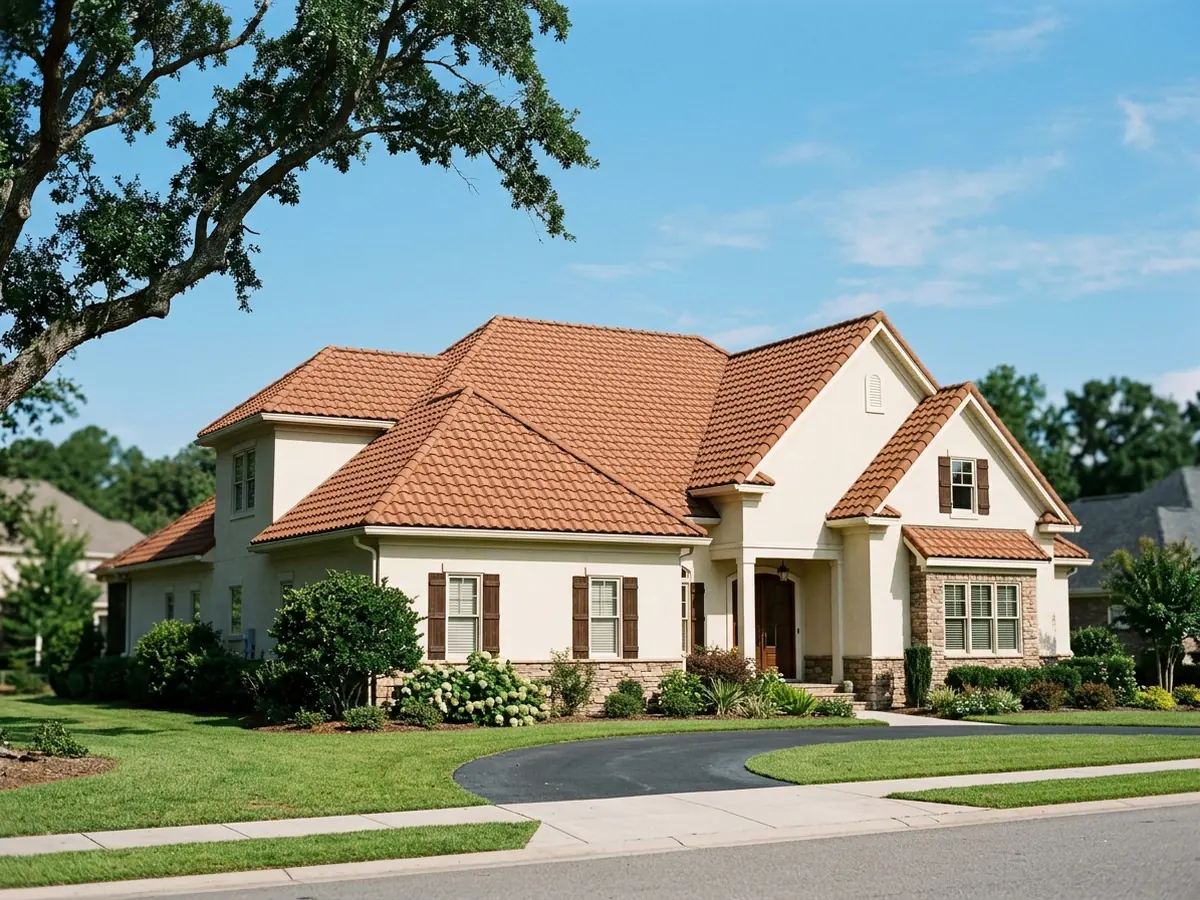
Tile profiles come in two shapes. Barrel tile copies the half-round Spanish tile, and scalloped tile copies the S-shaped Mediterranean tile. Real clay tile is fragile and cracks under hail, wind-blown debris and foot traffic. Stone-coated tile weighs under 2 pounds per square foot and doesn't crack or warp, so you get the tile look without the tile load on old rafters.
Shingle and Stone-Look Profiles
Shingle panels imitate architectural asphalt shingles. That suits a neighborhood where a metal roof shouldn't look like metal. Other makers offer stone-like shingles, two-color cottage shingles and high-barrel tile in 26-gauge steel. If your HOA reviews roof changes, take a shingle-profile sample to the meeting. Of all the profiles, it looks the least like metal.
Batten Installation
Battens are wood strips laid in a 2-foot by 2-foot grid over the deck, and the panels hang on them. The grid leaves a continuous 1½-inch air space under the steel, which the maker says lets hot air escape. Battens also give a flat plane over an uneven surface, so they're the usual choice when the new roof goes over an old one.
Direct-to-Deck Installation
Direct-to-deck panels fasten straight to the sheathing with no grid. Without battens in the way, the installer can cut and fit the panels tightly around dormers, valleys and cupolas. For a cut-up roof with many planes, direct-to-deck is usually the better fit.
Why Columbia homeowners call Columbia Metal Roofs
- A free on-site measure and a written quote
- Panel type, steel gauge and paint system spelled out before you sign
- Ask who pulls the roofing permit: it goes in the scope
- Your request goes to one independent metal roofer, not a list
- No fee to the property owner for the referral
Stone-Coated Steel Roofing and Hail Ratings
Stone-coated panels are commonly sold with a UL 2218 Class 4 impact rating, the top class. In the test, a steel ball is dropped twice on the same spot of the panel. The classes go by ball size: Class 1 uses a 1.25-inch ball, Class 2 1.50 inches, Class 3 1.75 inches and Class 4 a 2-inch ball. To pass, the panel can't crack, tear or split open.
What the rating doesn't say matters as much:
Dents still count as cosmetic
DECRA treats a dent or a patch of lost granules as aesthetic damage, not a functional warranty claim. A Class 4 roof can look worse after a storm and still be rated as working.Nothing is "hail proof."
The same maker says plainly that no roof can be called that. Class 4 means a smaller chance of damage, not none.FORTIFIED wants it for hail
The IBHS FORTIFIED Roof program asks metal panels to pass UL 2218 Class 4 only if the owner goes for its optional hail supplement.Insurance discounts aren't fixed
South Carolina law makes every insurer tell you, at each new policy and renewal, which discounts it gives for storm-resistant construction. Ask your own carrier whether a Class 4 roof changes your premium before you count on it.
Local storm counts are on our metal roof repair page.
Stone-Coated Steel Roofing Cost, Gauge and Lifespan
National estimates put stone-coated steel at $7 to $13 per square foot installed, or $700 to $1,300 per roofing square (100 square feet). Columbia bids can land outside that range. Battens cost more than direct-to-deck because they add labor and lumber. Most panels are 24- or 26-gauge steel, and the thicker 24-gauge costs more. The same source puts the roof's life at 40 to 70 years.
A few things wear on these roofs as they age. The granules shed slowly, and that dulls the color over the years. On shaded north slopes in humid weather, algae and mold can grow in the granule texture. Walking on the wrong part of a panel can dent it, so a satellite installer or chimney sweep should know where to step. Painting a stone-coated roof may void the maker's warranty, so ask before anyone sells you a coating.
Tear-off or roof-over is a separate question with code limits. See metal roof over shingles for when an old roof can stay. For the general price ranges of every metal type, see metal roof installation.
Stone-Coated Steel Roofing Estimate: Lines to Compare
When two stone-coated bids differ by a few thousand dollars, the gap is usually in one of these lines:
Profile and product line
The exact name, such as barrel tile, scalloped tile, shake or shingle, and whether that line goes on battens or direct to the deck.Granule color and finish
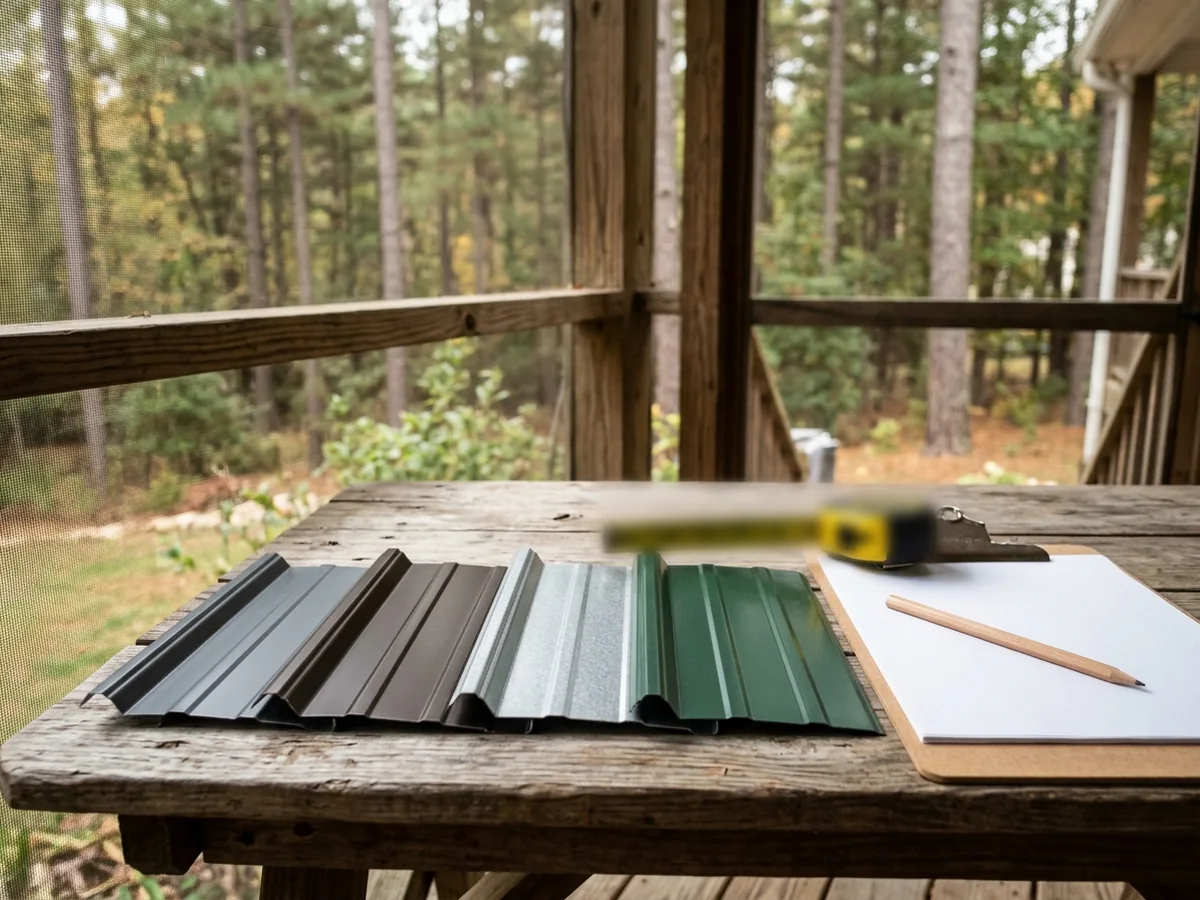
Ask for a physical sample. Screen colors aren't accurate, and granule texture changes how a color looks in afternoon sun.Battens
If battens are used, ask what lumber and spacing, and how they're fastened through to the deck.Tear-off or roof-over
Whether the old shingles come off. If they stay, ask the roofer to confirm in writing that the job meets the recover rules.Underlayment
The brand and type under the panels, and how it's lapped at valleys and walls.Trim pieces
Ridge, hip, rake and valley pieces in matching stone-coated finish, and how many are included.Gauge
24 or 26, and the steel thickness the maker lists for that product.Slope
The product's minimum pitch. In the South Carolina Residential Code, metal roof shingles can't go below 3:12.
A good roofer will walk the attic before quoting. They'll check the deck for soft spots and look at the vents, because the batten-or-deck choice and the ventilation plan affect each other.