
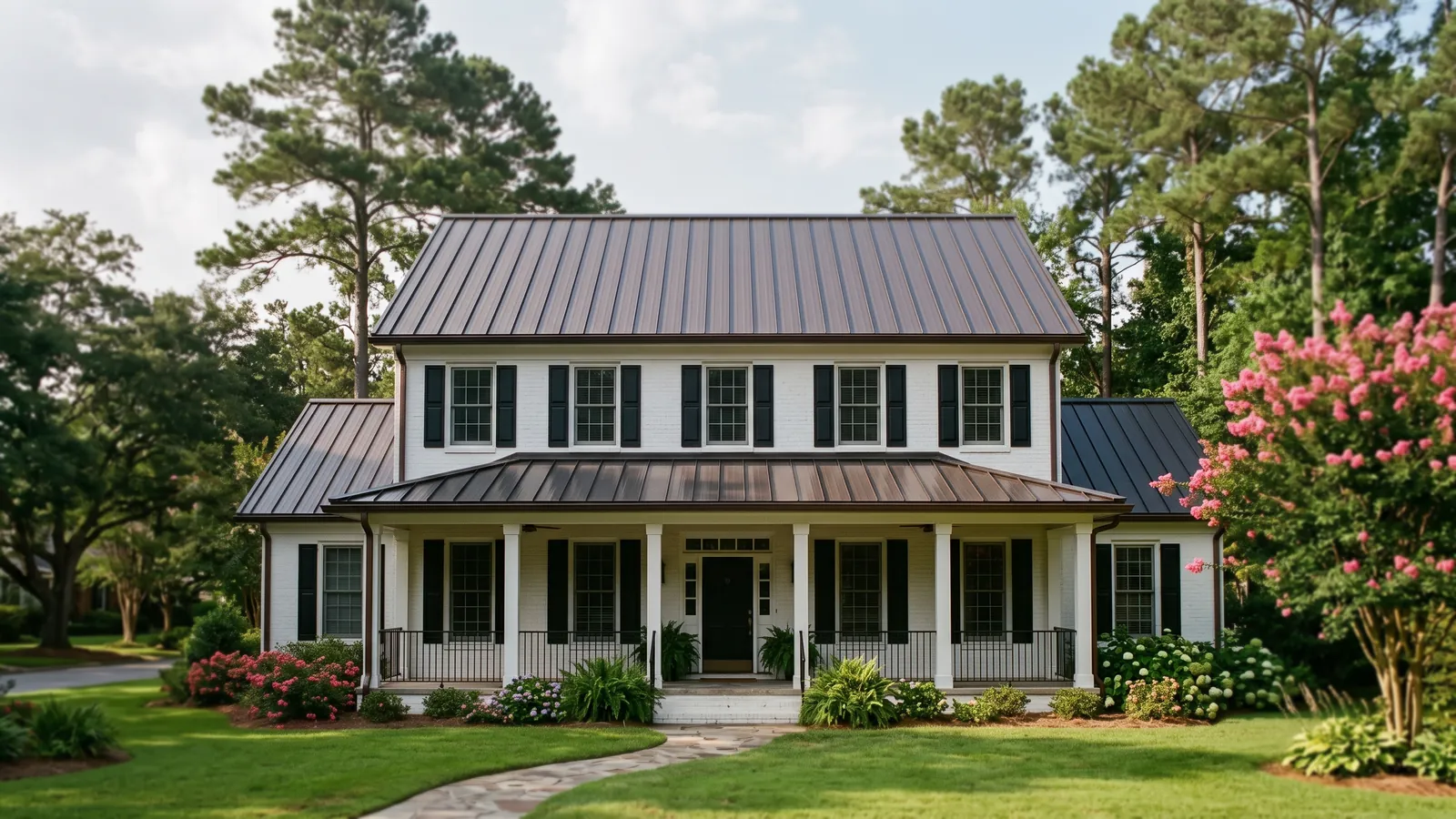
Standing Seam Metal Roof Panel Profiles
Every standing seam roof comes down to two decisions. The joint decides the engineering. The panel width, rib height and pan texture decide how the roof looks from the street.
Mechanically Seamed Panels: Single Lock and Double Lock
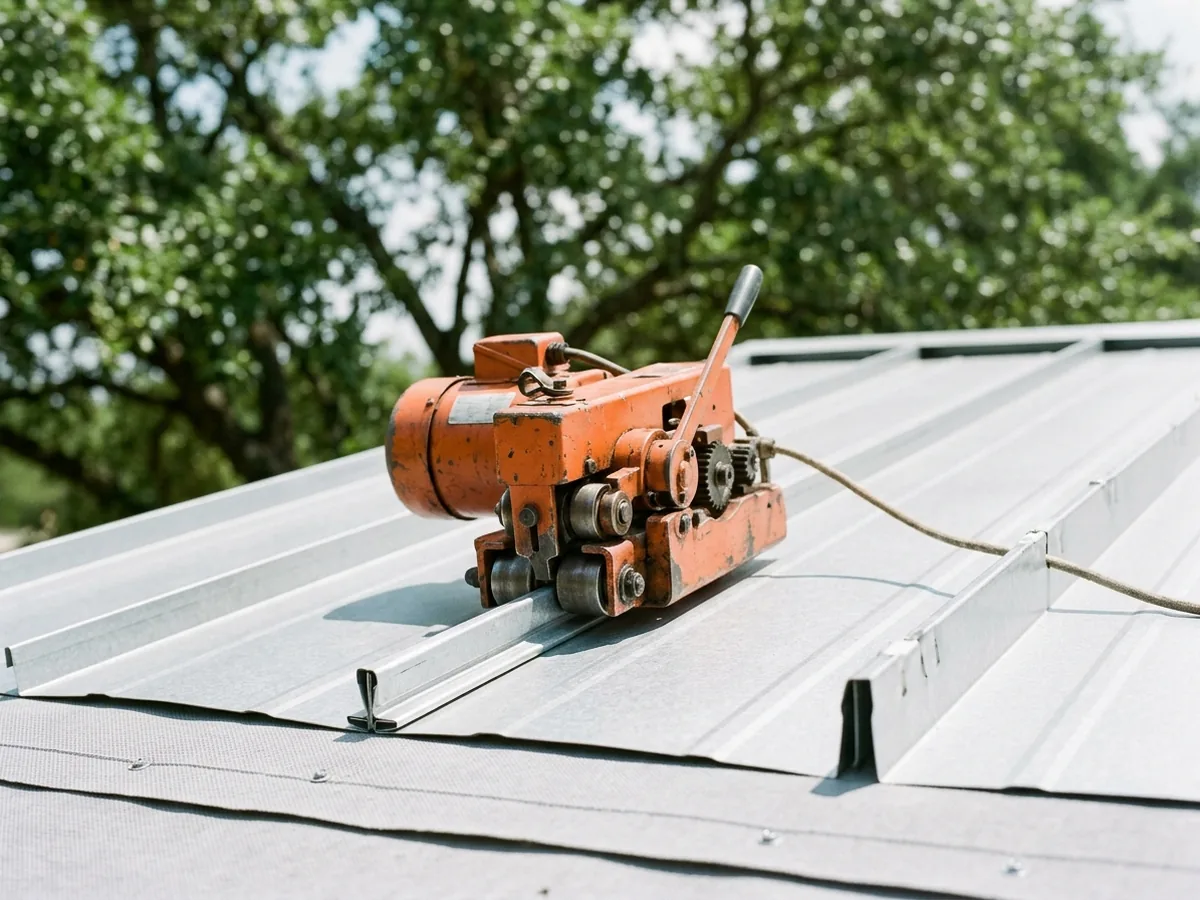
Here the clip hooks over the male leg, the female leg covers both, and a hand crimper or an electric seamer folds the joint shut. A single lock bends the seam 90 degrees and is easier to open later if a panel has to come out. A double lock folds it a full 180 degrees, which makes it stiffer and tighter against standing water, so it's the usual pick for shallow pitches. The seaming takes time on the roof, and that labor makes mechanical seam the most expensive of the three joints. For the code minimum slope of each panel family, see our low slope metal roof page.
Nail-Strip (Fastener Flange) Panels
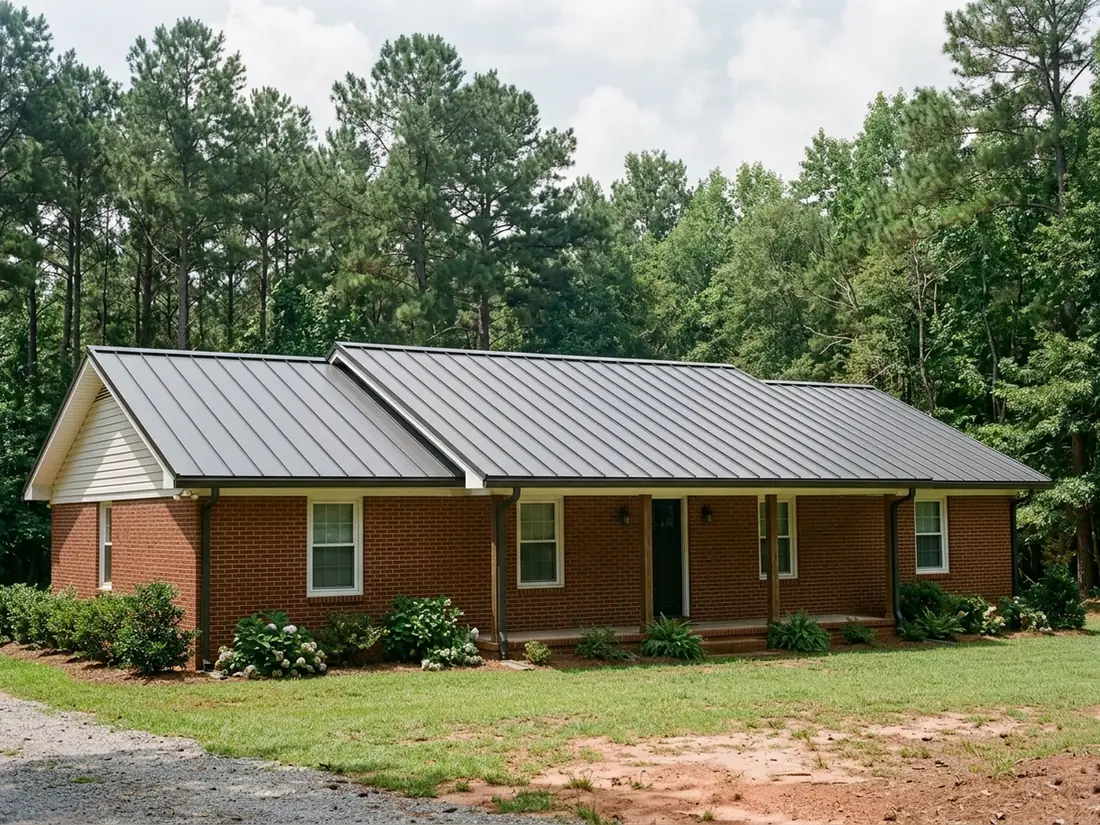
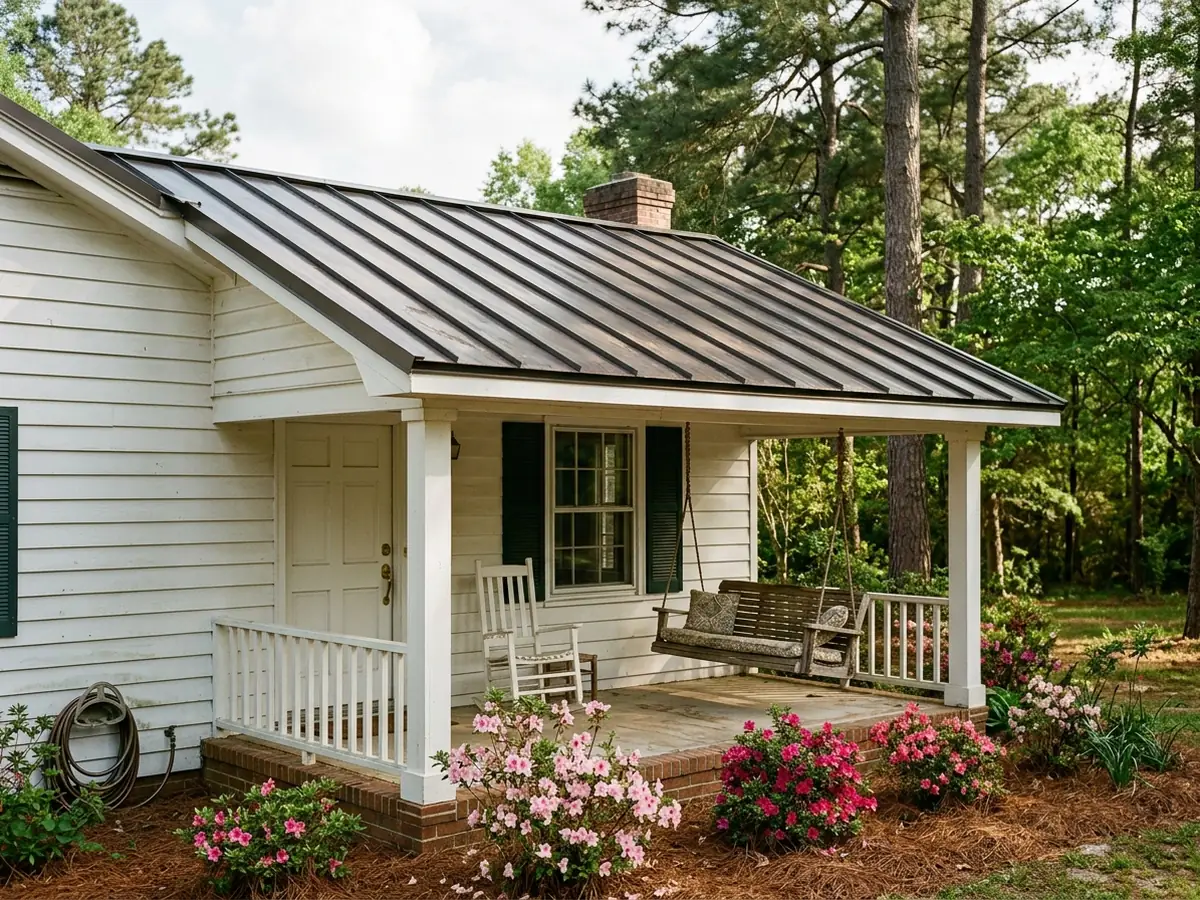
Nail-strip panels skip the clips. Screws go straight through a slotted flange on the male leg, and the next panel snaps over to hide them. It's the lowest-cost way to get a standing seam look, and it shows up on a lot of houses. It also has limits. Sheffield Metals says most fastener-flange profiles are not engineered or uplift-tested, are meant for 3/12 and steeper, copy every dip in the deck (which shows as waviness), and are usually held to about 25 feet long because a pinned panel can't slide as it heats. On a long ranch roof, ask how long the panel runs are before you pick this one.
Panel Width and Seam Height
Field-seamed panels come with 1-inch, 1.5-inch and 2-inch seams. A taller rib reads bolder from the street and holds back more water on a low pitch. A 1-inch seam sits quieter on a traditional house. Width changes the look too. A wide flat pan shows more waviness, and Sheffield Metals names panels 18 inches wide or less as the common fix.
Striated and Pencil-Rib Pans
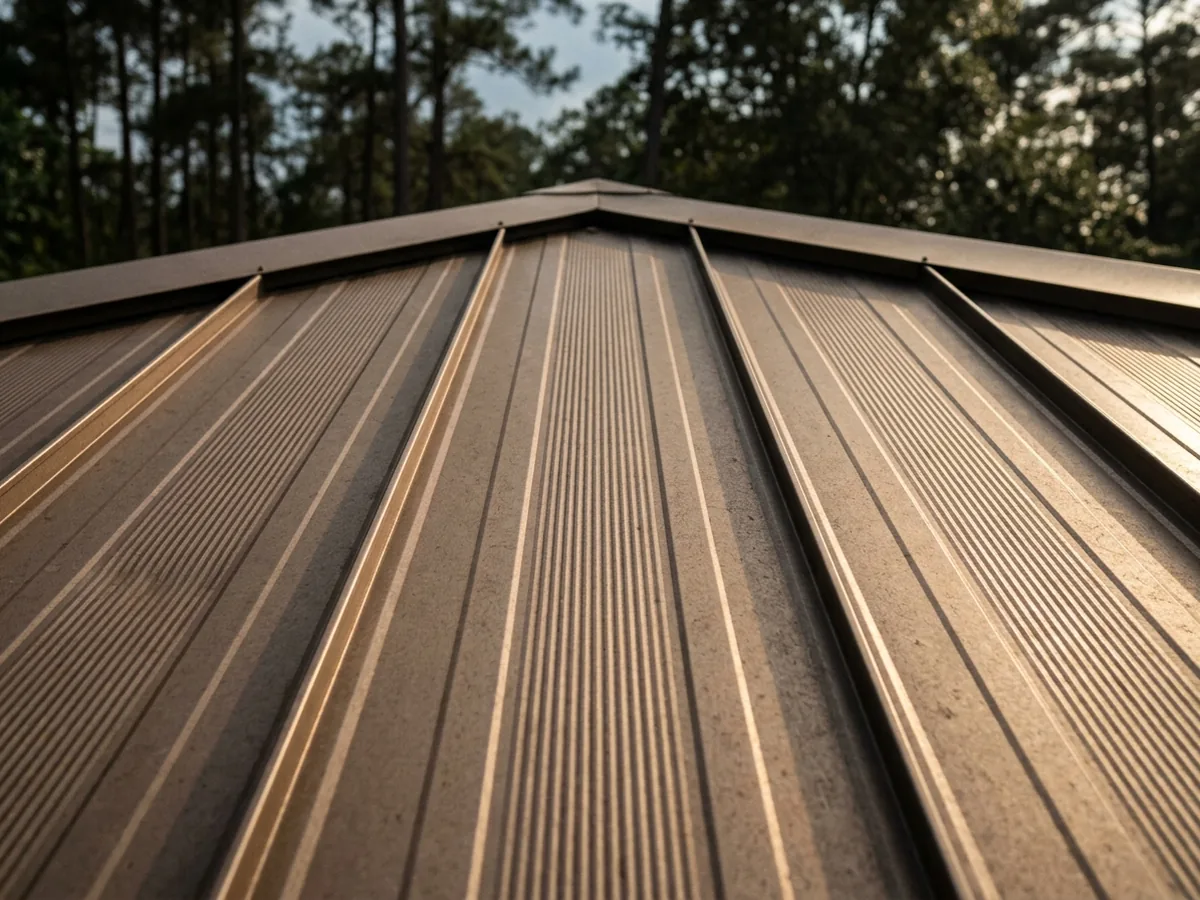
Striations and pencil ribs are shallow lines rolled into the flat of each pan. They don't stop the steel from moving, but they break up the flat surface so any waviness is harder to see. Pencil ribs give two or three crisp lines per panel. Striations give a finer texture across the whole pan. A smooth pan has the cleanest modern look and shows waviness most.
Why Columbia homeowners call Columbia Metal Roofs
- A free on-site measure and a written quote
- Panel type, steel gauge and paint system spelled out before you sign
- Ask who pulls the roofing permit: it goes in the scope
- Your request goes to one independent metal roofer, not a list
- No fee to the property owner for the referral
Standing Seam Metal Roof Wind Ratings, Clips and Oil Canning
UL 580 and UL 1897 Uplift Tests
The 2021 South Carolina Residential Code names UL 580 and UL 1897 among the uplift tests for metal roof shingles, and panel makers run the same tests on standing seam. In UL 580, a 10-by-10-foot piece of roof is pushed from below and pulled from above through three stages, UL 30, UL 60 and UL 90, each two hours long. A panel that survives all three carries a UL 90 rating. UL 1897 takes the same specimen and raises the pressure until something gives, which tells an engineer where the assembly fails. ASTM E1592 is a separate structural test.
A rating covers one tested assembly: that panel, gauge, clip and clip spacing on that kind of deck. Ask for the test report on the exact panel being quoted, and whether the clip spacing on your roof matches the tested spacing.
Clips, Heat and Thermal Movement
Columbia Metropolitan Airport averages about 81 days a year at 90°F or hotter. A long steel panel grows on every one of those afternoons and shrinks again at night. On clips, the panel slides. Screwed down without clips, the same movement can work fasteners loose until the gasket no longer seals, as Sheffield Metals notes. For long runs, ask whether the quote uses expansion clips. The manufacturer recommends them where temperatures swing hard.
Oil Canning
Oil canning is visible waviness in the flat part of a panel. The Metal Construction Association says no manufacturer, fabricator or installer can guarantee a project free of it, and it's a looks issue rather than a leak. What reduces it: thicker metal, narrower pans, striations or pencil ribs, a flat deck, and clips instead of face fastening. If a dead-flat roof matters to you, say so before the panel is chosen.
Standing Seam Metal Roof Pricing and Service Life
HomeGuide's national figures put standing seam at $9 to $16 per square foot installed. Per roofing square (100 square feet), concealed-fastener metal runs $900 to $1,600 against $500 to $1,200 for exposed-fastener panels. These are national estimates, not Columbia quotes. General cost basics, tear-off and deck repair are on our metal roof installation page.
Part of the extra cost comes back in service life. In humid climates, HomeGuide expects 30 to 50 years from corrugated metal and more from standing seam. A Metal Construction Association field study looked at unpainted Galvalume standing seam roofs with up to 35 years of service and projected a coating life of at least 79 years on every roof but one. Those were low-slope commercial roofs, but the steel and coating are the same family used on houses. Gauge and paint (PVDF or SMP) are covered on our Galvalume metal roof page.
Standing seam also takes rooftop solar without holes in the panels. S-5! makes clamps that grip the seam with round-tipped set screws.
Standing Seam Metal Roof Bids: Points to Get in Writing
Joint
Snap-lock, single lock, double lock or nail strip, named on the quote.Panel
Manufacturer, profile name, gauge, pan width and seam height.Clips
Fixed or expansion clips, and the spacing from the panel's uplift test.Uplift test
The UL 580, UL 1897 or ASTM E1592 result for that assembly.Pan finish
Smooth, striated or pencil-rib, so the oil canning risk is agreed up front.Underlayment
The product name, rated for the heat under metal.Trim
Ridge, eave, rake and wall flashing in the same metal and paint as the panels.
In a historic district, check before ordering. Columbia's Earlewood Protection Area guidelines list "standing seam with historic profile" as a permitted roofing material for new construction, and the city's preservation staff review roof changes on historic buildings. A good roofer will ask about this at the first visit.