
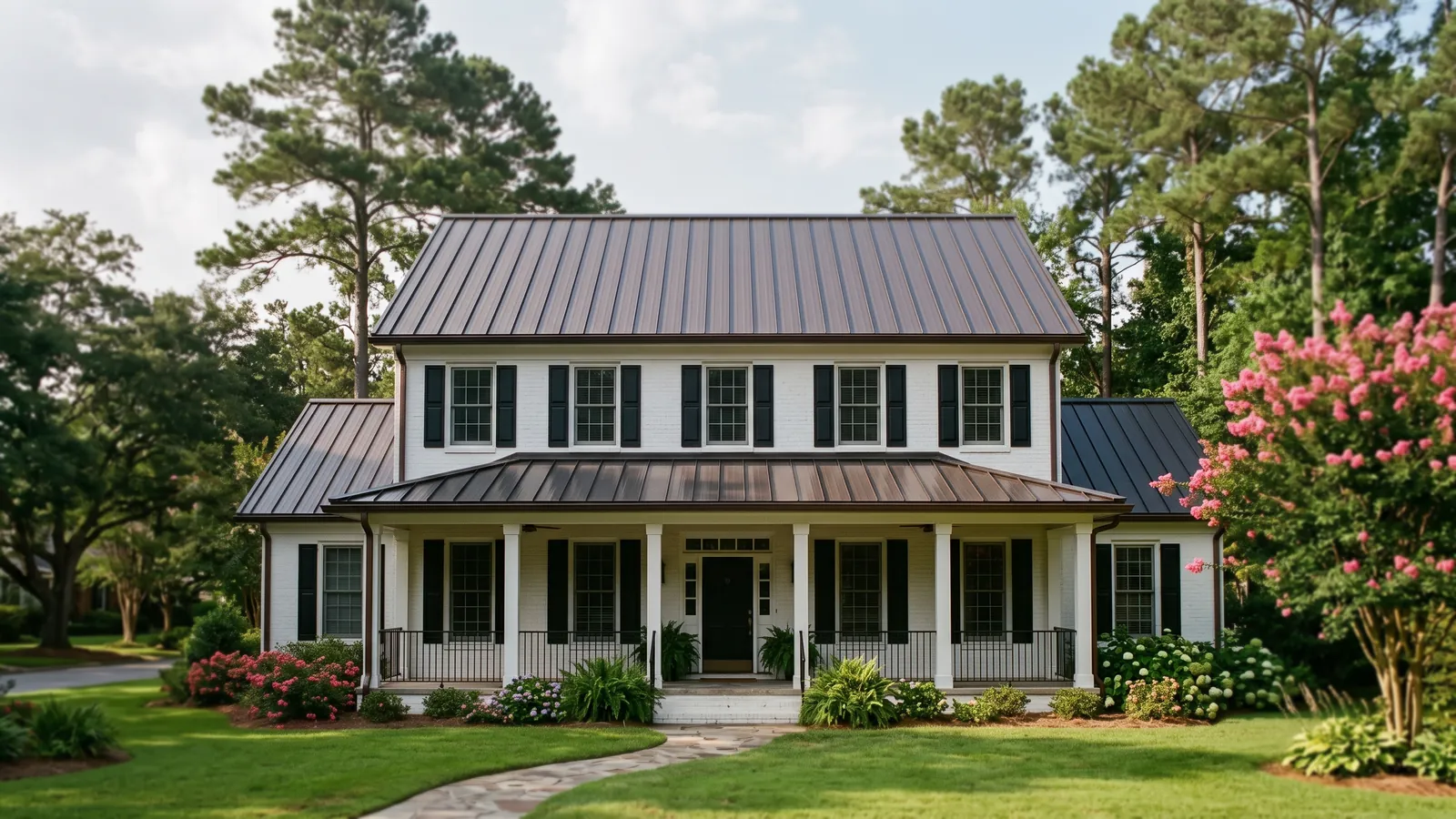
Metal Roof Over Shingles: Three Builds and One Hard Stop
A recover leaves the shingles in place. If they have to come off first, the job is a metal roof installation. Replacing an old metal roof is metal roof replacement.
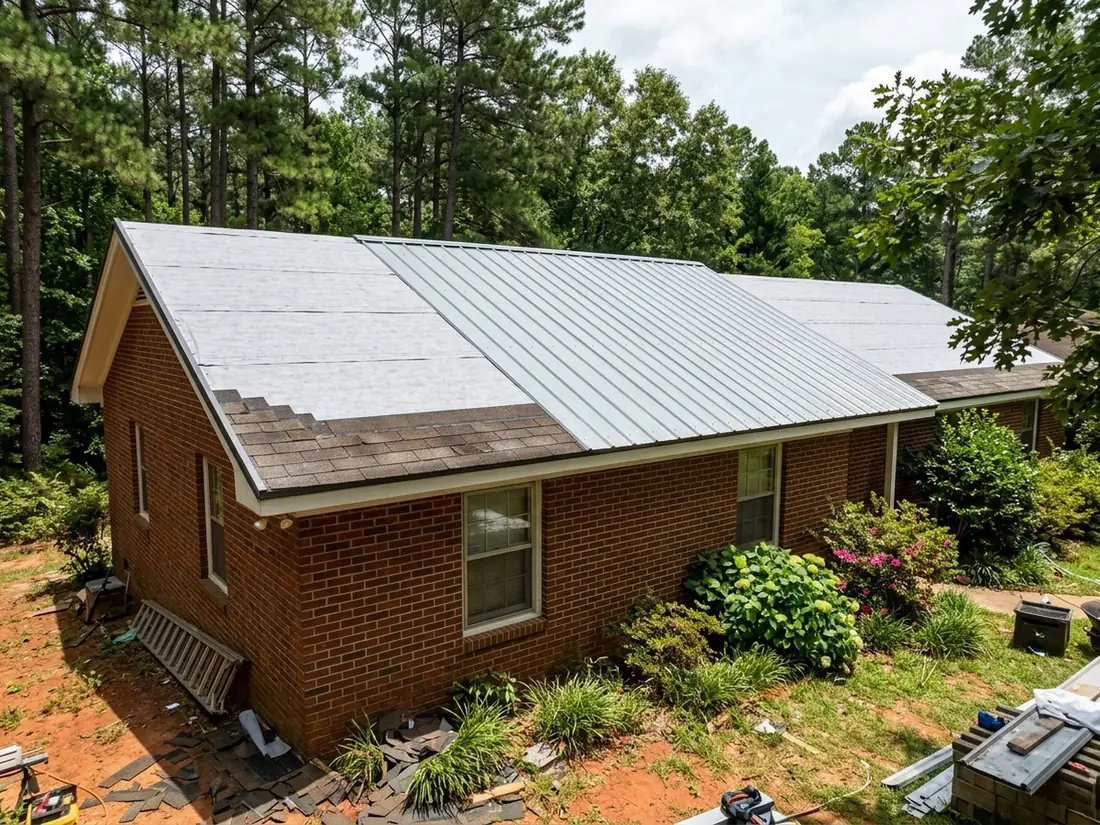
Metal Panels Directly Over Shingles
The simplest build: new underlayment over the old shingles, then panels fastened through both layers into the deck. The code allows it when the panels go on to the roofing maker's approved instructions, so ask which manufacturer's guide the crew is following and whether it covers installing over shingles. The Metal Construction Association (MCA) manual lists the prep: repair damage, pull or drive any nails that stick up, cut shingles that overhang the edge flush with the deck, and take off the hip and ridge caps so the new roof sits flat.
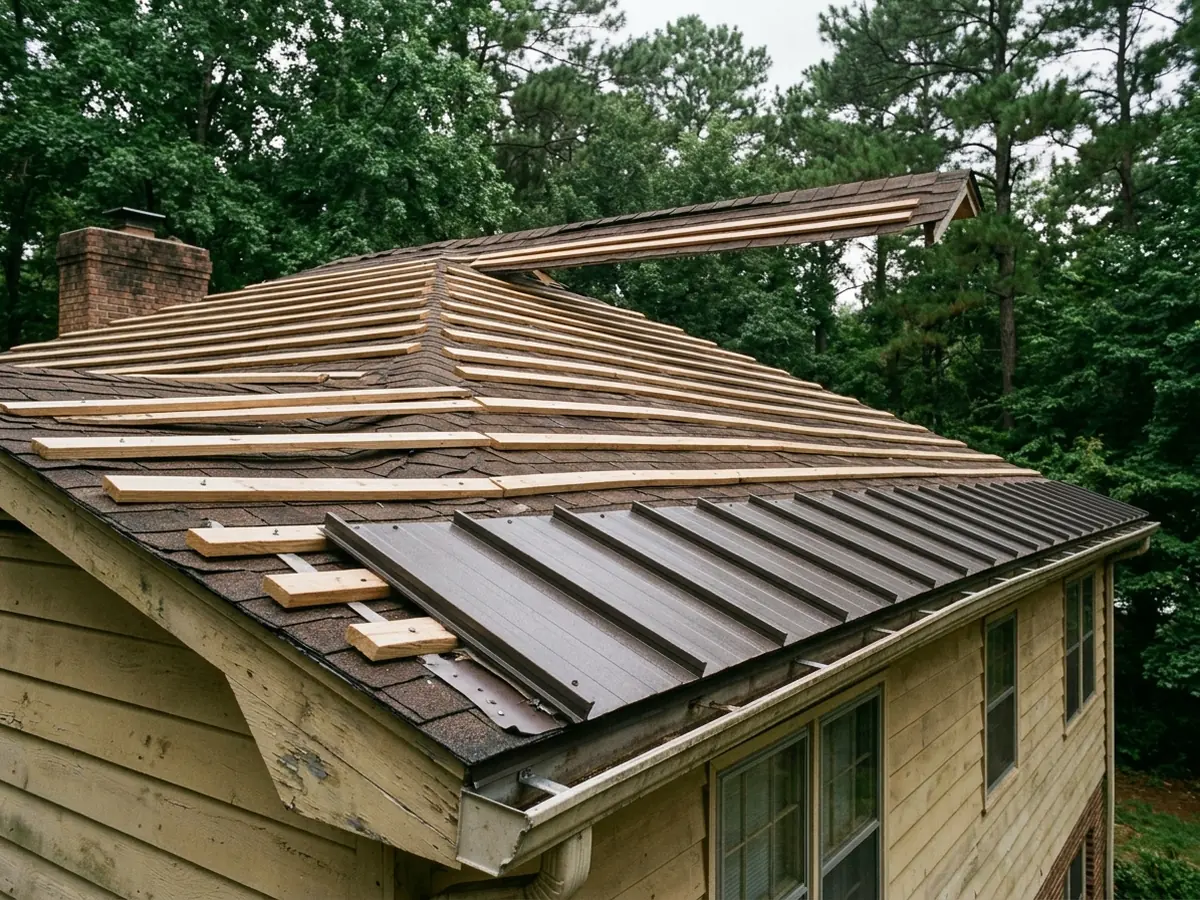
Metal Roof Over Furring Strips or Purlins
Here a grid of lumber goes on first. FABRAL's details call for 2x4 purlins or 1x4 furring strips run parallel to the ridge and fastened into the rafters or trusses, at no more than 24 inches on centre. Where the deck's condition is in doubt, its guide says to use 2x4 purlins fastened through the decking into the rafters. Purlins give the panels a flat plane to sit on even when the shingles below are curled, and they leave an air space between old roof and new. Exposed-fastener panels such as R-panel are often put on this way. Our corrugated metal roofing page covers those profiles.
Metal Roof Over a Vented Nailbase
A vented nailbase is a factory-made panel: rigid polyiso foam, wood spacers, then a plywood or OSB top sheet. The Polyisocyanurate Insulation Manufacturers Association puts the air gap at 1 to 2 inches and lists it for new and existing roofs. It notes that metal shingles and standing seam perform best when the surface under them is vented. The result is new insulation, a vented layer and a nailable deck in one pass. Because the roof gets thicker, the drip edge, fascia trim and gutters all move out, and the quote should price that.
When Tear-Off Is Required
R908.3.1.1 bans a recover in three cases:
- Two or more layers already. If the house has ever been re-shingled over old shingles, the next roof starts with a tear-off.
- Wet or rotted. A roof that is "water soaked or has deteriorated" to the point it can't serve as a base.
- Slate, clay, cement or asbestos-cement tile. These can't be covered.
There is one exception worth knowing. Standing seam systems built to carry their loads straight to the framing, not to the old roof, don't require removal of the old covering (R908.3.1). Whatever goes over the old roof, the framing has to carry it plus the crew and materials during the work (R908.2).
Why Columbia homeowners call Columbia Metal Roofs
- A free on-site measure and a written quote
- Panel type, steel gauge and paint system spelled out before you sign
- Ask who pulls the roofing permit: it goes in the scope
- Your request goes to one independent metal roofer, not a list
- No fee to the property owner for the referral
Metal Roof Over Shingles: Weight, Heat and Moisture
Two arguments get made for leaving shingles on. The first is weight. The Metal Roofing Alliance says metal roofing weighs about half as much as asphalt, so a metal recover adds roughly half the weight of the shingle layer already up there. A sagging ridge or cracked rafter changes that, and a good roofer will look in the attic before agreeing to a recover.
Heat is where the build type matters. A direct recover puts the steel almost on the shingles. Strips, purlins or a nailbase leave an air gap that can be vented at the eave and ridge. The MCA points to insulation or ventilation in the space between an old roof and a new metal one as an energy gain.
The second argument is waste. The Alliance puts asphalt shingles going to U.S. landfills at about 20 billion pounds a year, and the MCA notes a recover saves "many hours of labor, and landfill costs".
The case against comes down to what you can't see. Shingles hide the deck, and a recover traps whatever is under them. A slow leak that has softened the plywood around a chimney or a bathroom vent will keep rotting under the new steel. For underlayment choices and attic ventilation under metal, which matter in Columbia's humid summers, see our metal roof installation page.
Metal Roof Over Shingles: Checks Before You Sign
Layer count
Ask the roofer to show you the edge at a rake or gutter where the layers can be counted.Deck check
Ask how they'll find soft spots: walking the roof, probing from the attic, or pulling a few shingles at suspect areas such as valleys and around chimneys.Which build, and why
Direct, strips or nailbase, with the strip size and spacing written down.Fasteners
For strips or purlins, ask for fastening into rafters or trusses, not just into the sheathing.Flashing
Rusted or damaged flashings, edgings and vents must be replaced (R908.5). Ask for new pipe boots, wall flashing and chimney flashing to be priced in.Ventilation
How the ridge and eaves will vent once the old ridge cap is gone.Permit
Who pulls it. The installation page linked above covers the permit and the state licensing rule.
Metal Roof Over Shingles or Tear-Off: Choosing
Where the code allows either, the choice comes down to the deck and the roof's shape. A recover pays off on a simple gable or hip roof with no leak history, where skipping the tear-off and the dumpster is real money saved. A tear-off earns its cost when a leak has been running for months, or when the roof has a lot of valleys, chimneys and dormers. The MCA puts flashing transitions and valleys at the top of its list of leak points, and a tear-off lets the crew rebuild those details from the deck up. For prices, the installation page has sourced national cost ranges by metal type.