
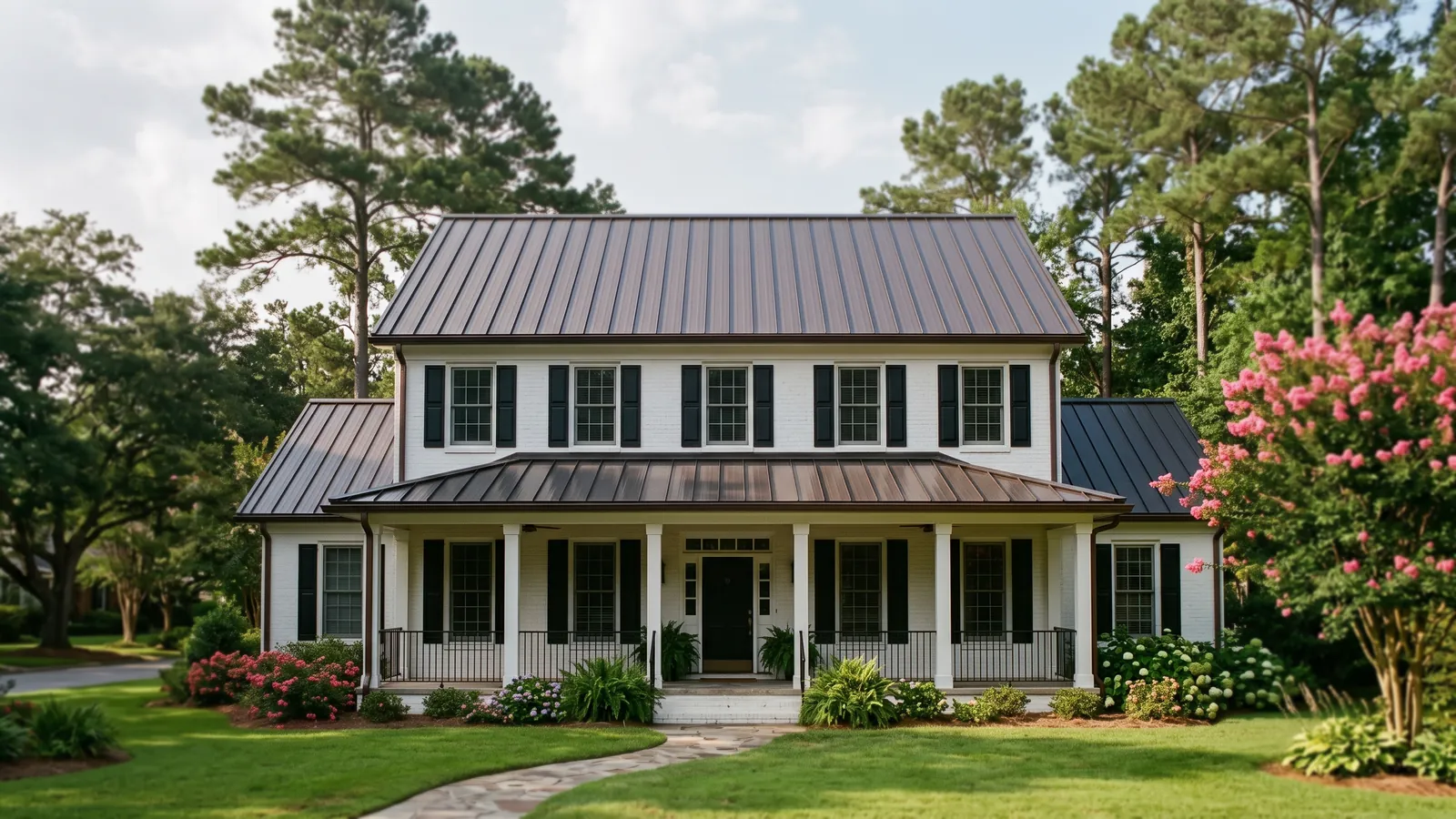
Corrugated Metal Roofing Profiles and Ribbed Panels
People say "corrugated" for any ribbed steel sheet, but the profiles differ in rib shape, coverage width and what they're made for. Here are the ones a Columbia contractor will usually quote.
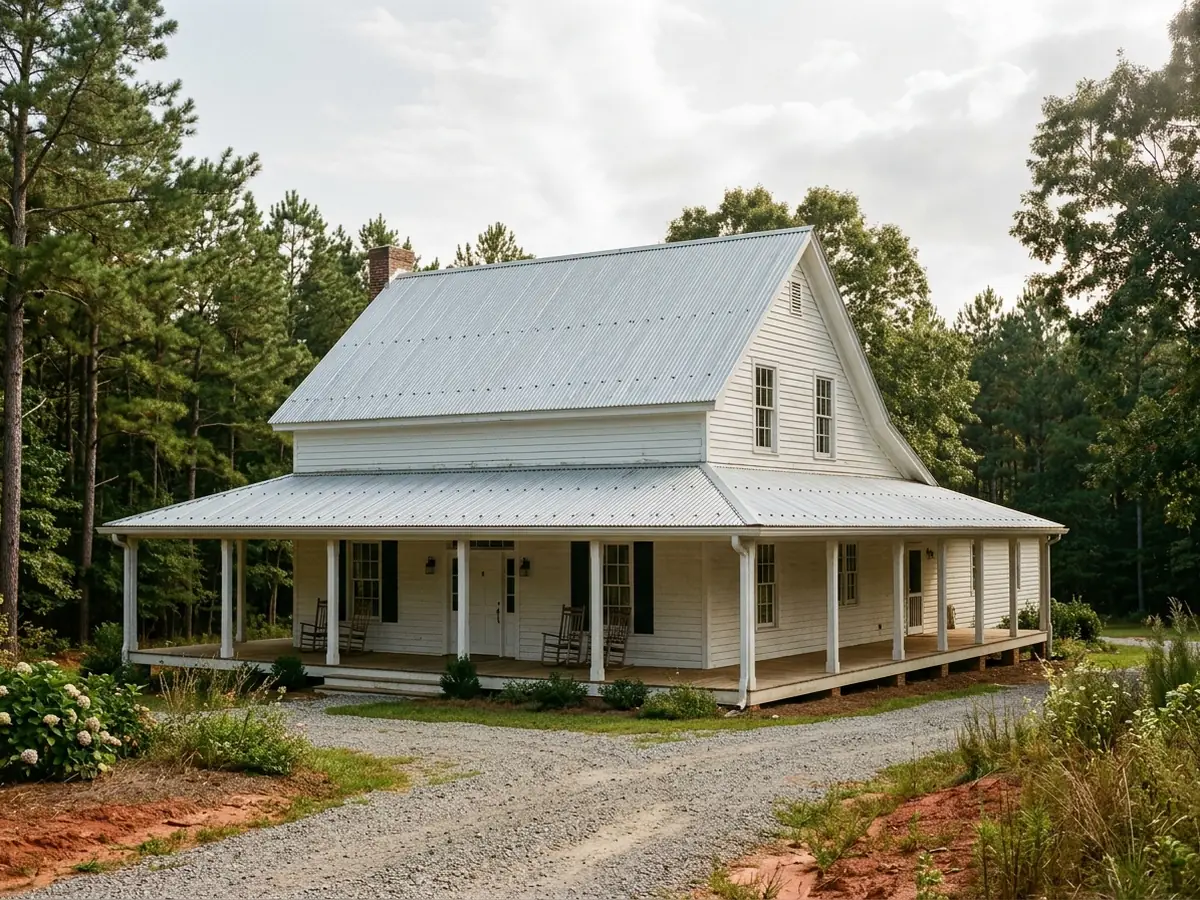
Classic Round-Wave Corrugated
The original wavy sheet. In the common 7/8-inch profile, each wave stands 7/8 inch high and the waves sit 2.67 inches apart. On a roof, each sheet overlaps the next by two corrugations, so you lose width at every lap. Western States Metal Roofing says to buy 10 to 12 percent more corrugated than the roof area for that reason. It's the look of old farmhouse and porch roofs.
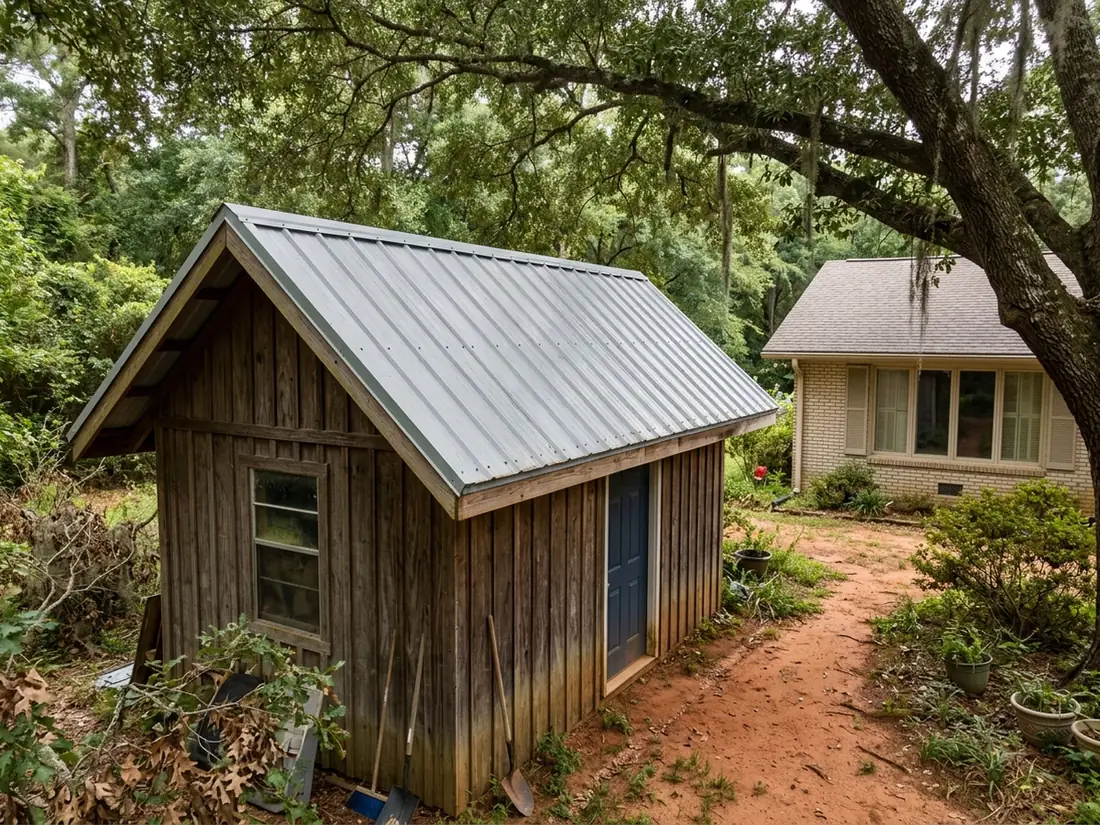
R-Panel and PBR
R-panel and PBR look almost the same: 36 inches of coverage, trapezoid ribs 1-1/4 inches tall, flat pans between. PBR adds a purlin bearing leg on the edge that laps under the next sheet, which makes the overlap stronger and more weathertight. JD Metals sells R-panel as siding only and PBR for roofing and siding. The full 36-inch coverage means no width is lost at the side laps. For a roof, ask the contractor to name PBR, or another panel the manufacturer lists for roofing.
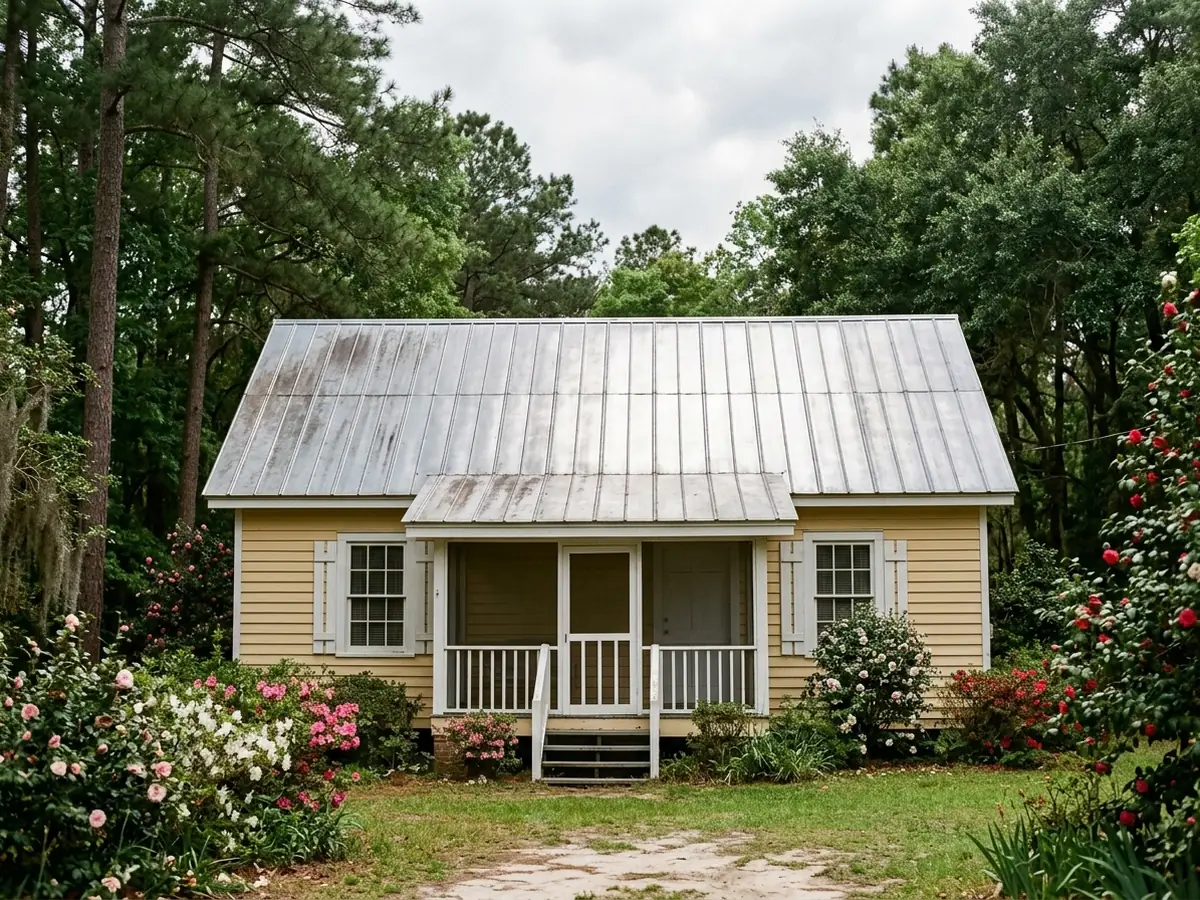
5V Crimp
5V crimp has a flat face broken by low V-shaped ribs. MBCI's version covers 24 inches, with 1/2-inch ribs on 12-inch centers, in 29 gauge standard or 26 gauge on order. The low ribs give it a quieter, older look than PBR, and in our view it suits cottages and porches where a tall rib would look heavy.
Ag Panel
Ag panel is the barn and outbuilding sheet: 36 inches of coverage with ribs about 3/4 inch tall, sold in 29, 26 and 24 gauge. It's meant for agricultural, light commercial and post-frame buildings and residential use. Purlin framing and condensation on open barns are on our barn metal roofing page.
Bare Galvalume or Painted Panels
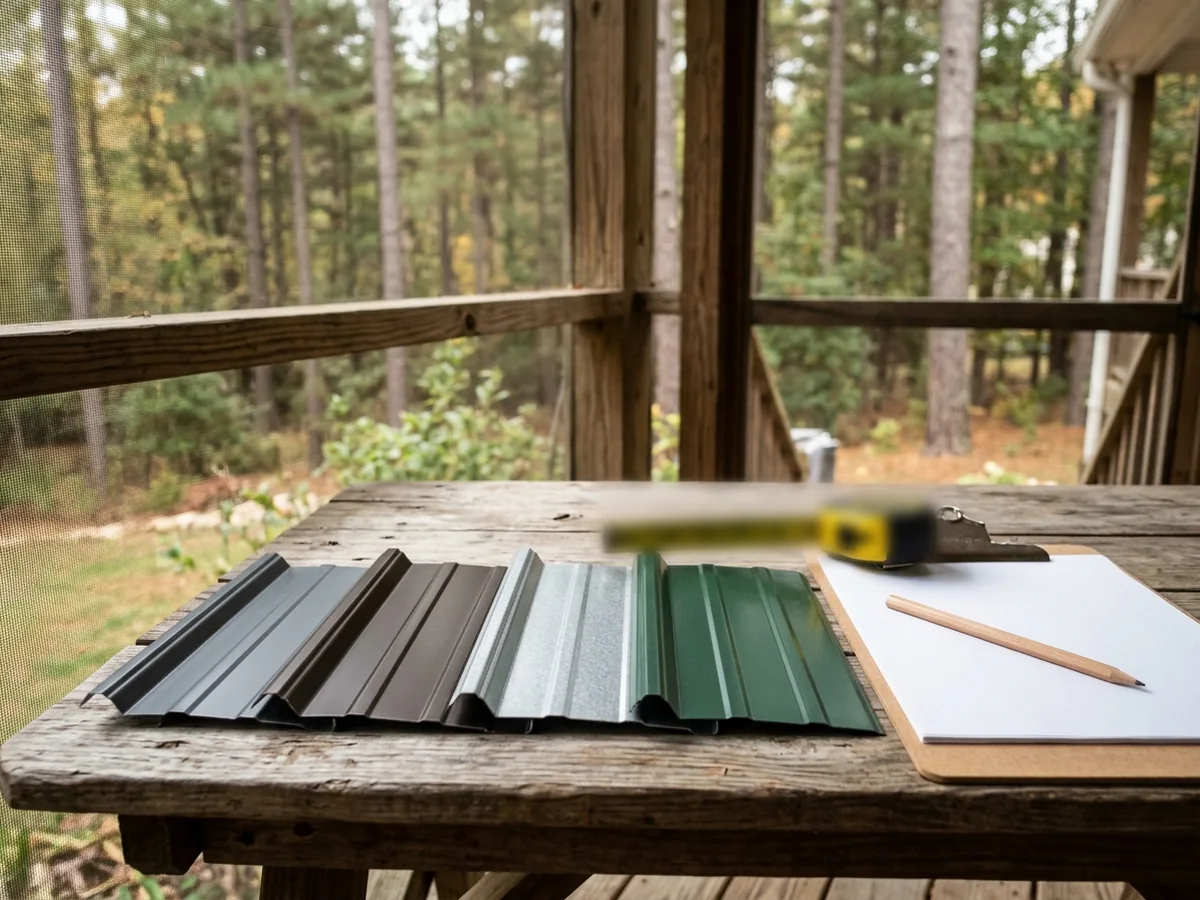
Every profile above comes in bare Galvalume, which weathers to a soft matte silver, or painted steel in SMP or PVDF. The coatings, gauges and cool-roof colors are compared on our Galvalume metal roof page.
Why Columbia homeowners call Columbia Metal Roofs
- A free on-site measure and a written quote
- Panel type, steel gauge and paint system spelled out before you sign
- Ask who pulls the roofing permit: it goes in the scope
- Your request goes to one independent metal roofer, not a list
- No fee to the property owner for the referral
Corrugated Metal Roofing Screws, Washers and Re-Screw Timing
On a screw-down roof, every fastener is a hole sealed by a rubber washer. That's the main difference from standing seam, and the main upkeep.
Why they loosen
Sheffield Metals explains that a panel screwed straight to the framing can't slide as it heats and cools, and the movement can back the screws out until the gasket lifts off the metal.Washer rubber
Levi's Building Components says EPDM washers resist weather better than neoprene, and names UV exposure as a primary cause of washer breakdown. Cap screws that cover the washer protect it from the sun.Installation
SFS warns that a screw driven too deep crushes the washer until it bulges out and lets water in. Ask the crew to set screws snug, not flattened.How long they last
SFS treats roof screws older than 20 years as on borrowed time and expects most not to last safely past 30.How often to check
SFS recommends an inspection twice a year and after hail or wind. Sheffield Metals puts exposed-fastener upkeep at up to twice a year.Re-screwing
Replacement screws go one size up, for example a #17 where a #14 came out.
A long Midlands summer keeps that movement going for months. A re-screw is a normal part of owning this kind of roof. Our metal roof repair page covers what one costs.
Corrugated Metal Roofing Cost and Lifespan in a Humid Climate
HomeGuide puts corrugated and other sheet-metal roofing at $5 to $12 per square foot installed, the cheapest metal option. By the square, exposed-fastener roofing runs $500 to $1,200 installed against $900 to $1,600 for concealed-fastener standing seam. Those are national figures. On a house, tear-off and deck repair come on top.
For service life, HomeGuide says metal roofs in high-humidity climates typically last 30 to 50 years for corrugated metal, and longer for standing seam.
Pitch limits the choice, too. Lapped panels need more slope than standing seam, and below a certain pitch the side laps need sealant. The numbers are on our low slope metal roof page.
Corrugated Metal Roofing on a House Deck or on Purlins
What sits under the panels matters as much as the profile. On a house, ribbed panels normally go over a solid plywood or OSB deck with underlayment. The Metal Roofing Alliance says that deck and underlayment act as sound barriers, and with proper attic insulation most owners hear no more rain than under any other roof. Classic Metal Roofing Systems adds that metal on a decked, insulated and vented house doesn't pose a condensation risk, while panels put on without decking can.
On sheds, carports and barns the same panels are often screwed straight to wood or steel purlins with nothing beneath. That is where PBR's purlin bearing leg earns its keep, and where rain noise and dripping condensation become real questions. Before you accept that setup on anything heated or lived in, ask the contractor why there's no deck.
Corrugated Metal Roofing Quote: Line Items to Check
Profile and gauge
Corrugated, PBR, 5V or ag panel by name, plus 29, 26 or 24 gauge.Coating and paint
Bare Galvalume, SMP or PVDF, and the color.Screws
Length, coating, and EPDM washers or cap screws.Screw pattern
How many per sheet at each purlin or deck line, and tighter rows at the eaves and ends where the manufacturer calls for them.Side laps
How many corrugations or ribs overlap, and whether sealant tape goes in the lap.Closures
Foam closure strips at the eave and ridge so wind-driven rain, wasps and birds can't get under the ribs.Waste factor
For round-wave corrugated, the extra 10 to 12 percent for laps should be in the material count.What's underneath
On a house, a solid deck and underlayment, or purlins over the old roof, and the reason for the choice.