
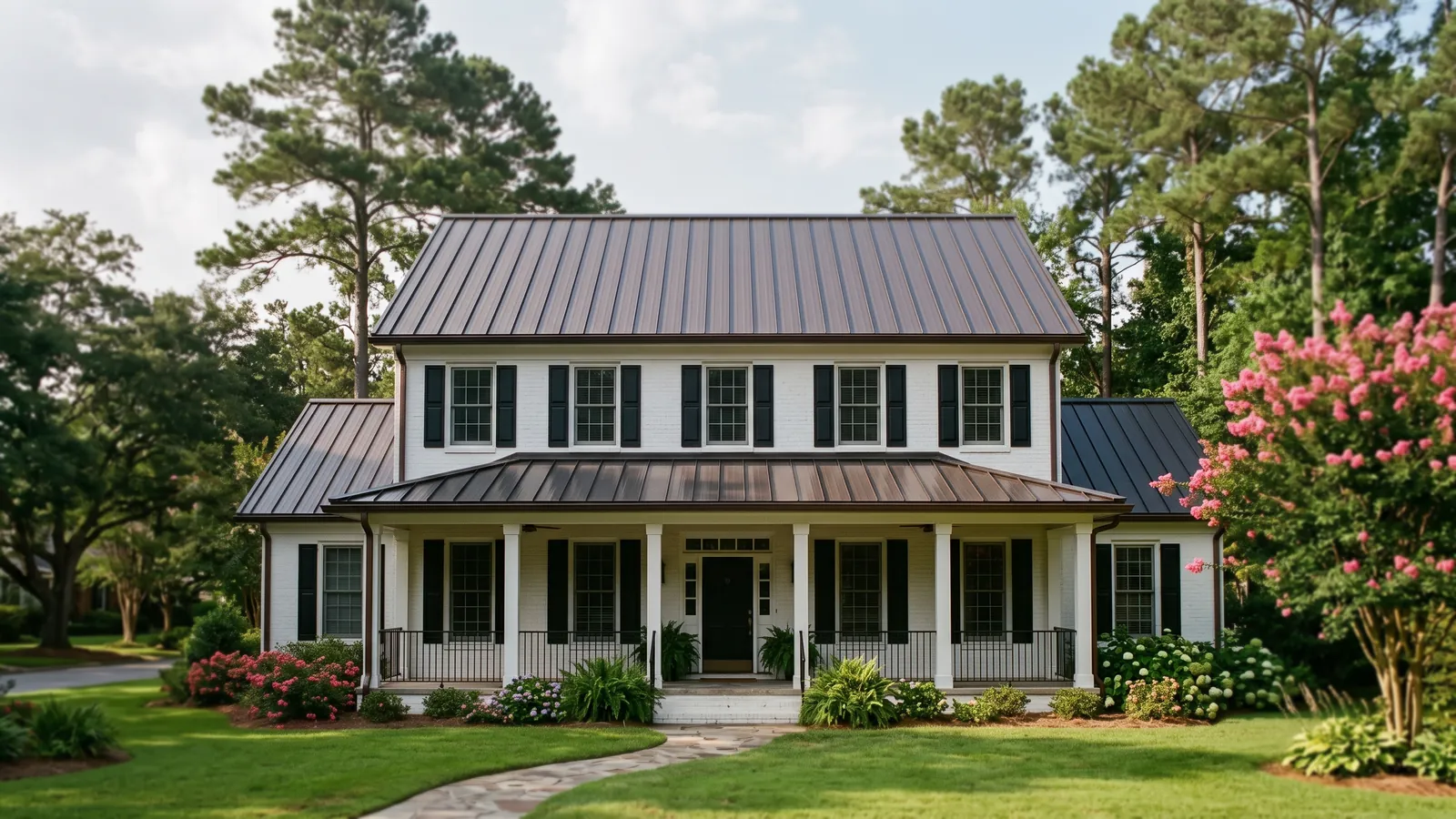
Galvalume Metal Roof Choices: Coating, Paint and Steel Thickness
Most panel makers now run Galvalume as the bulk of their steel line, with galvanized as the exception. The choices below sit on top of that base sheet, and each one shows up as a line on a good bid.
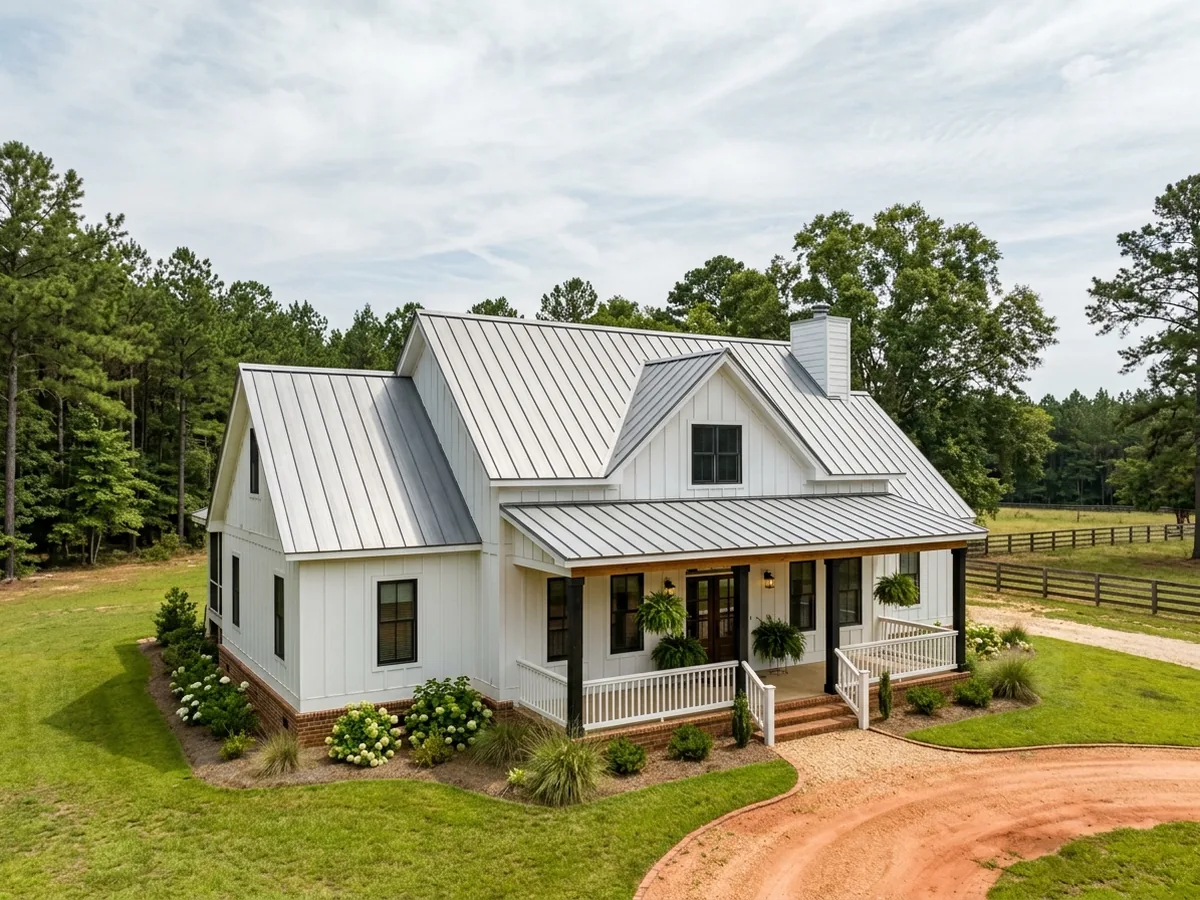
Bare Galvalume
Unpainted Galvalume is the matte silver roof on farmhouses and shops. Bare sheet usually carries the heavier AZ55 coating, often with a clear acrylic film, while painted sheet usually starts at AZ50. The aluminum in the alloy gives barrier protection. The zinc protects cut edges, where a little red "edge creep" can show and then stops. Steel suppliers rate Galvalume's corrosion resistance at about two to four times that of galvanized steel. In a field study of low-slope Galvalume standing seam roofs up to 35 years old, the Metal Construction Association projected service lives over 60 years.
Bare Galvalume has two weak spots. The clear acrylic layer scuffs under foot traffic, and a scuffed bare panel can turn blotchy, so installers have to work carefully on it. It also does best away from copper, lead, brick, concrete, iron and treated lumber. Galvalume isn't recommended for buildings that house animals, because ammonia from manure attacks the coating. See barn metal roofing for how ag buildings are handled.
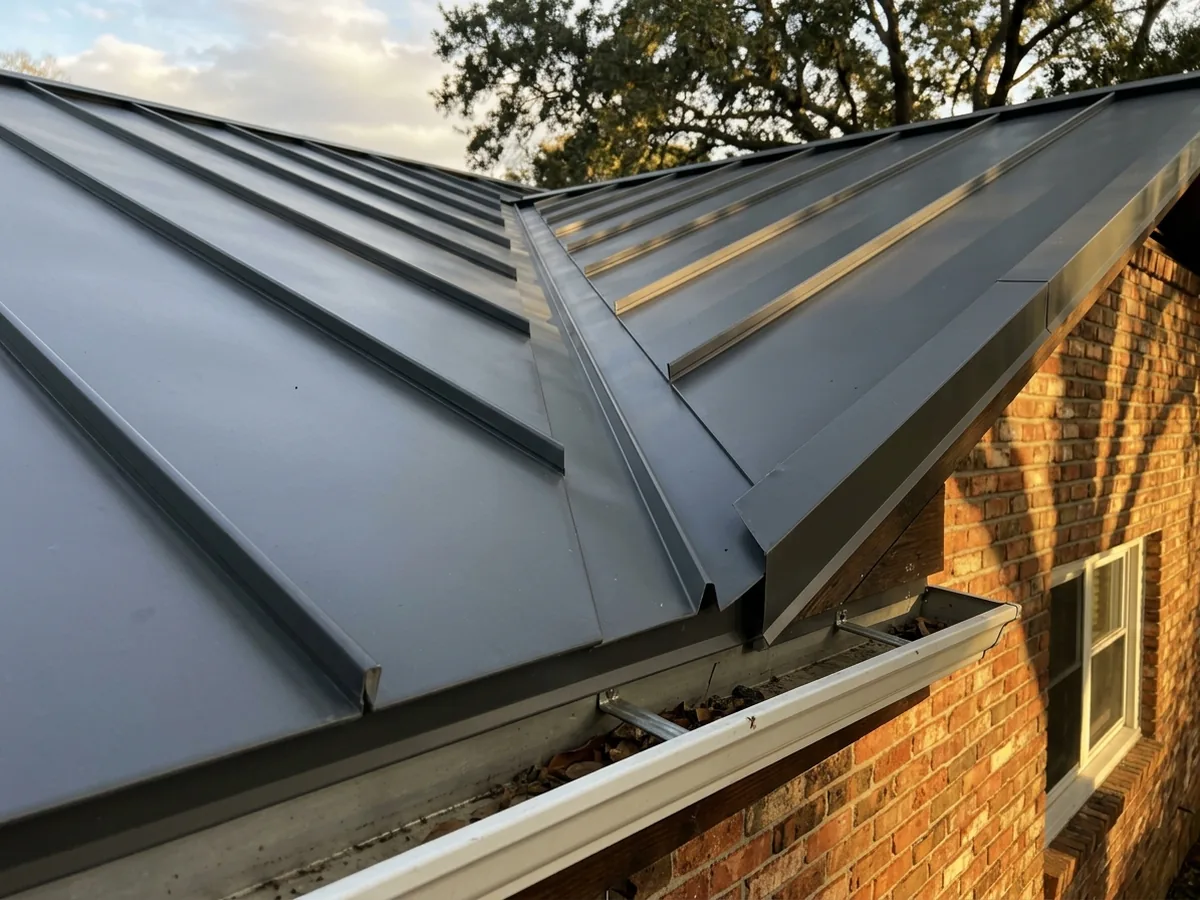
Painted Galvalume: PVDF and SMP
Painted residential panels come in two main resin families:
- PVDF (sold as Kynar 500 or Hylar 5000). The resin is about 70% polyvinylidene fluoride and 30% acrylic, and Arkema's license requires at least 70% PVDF resin for the Kynar 500 name. It holds color and resists chalking longest, which matters most for reds, blues and other vivid colors. The film is softer and scratches more easily during handling, so PVDF panels often ship under a peel-off plastic film.
- SMP (silicone-modified polyester). It's harder and more scratch-resistant, so it handles rough installs better. It chalks and fades more than PVDF over the years. As of early 2022, one coil supplier priced PVDF 60% to 80% above SMP.
Paint warranties are written by the panel or coil supplier, not the roofer. Ask whose finish it is and which resin, and read the chalk and fade limits in writing.
Galvanized G90
G90 galvanized steel carries a zinc-only coating under ASTM A653, and "G90" names its coating weight. It meets the same code minimum as AZ50 Galvalume, and suppliers rate Galvalume two to four times more corrosion-resistant. Galvanized still has two uses. It bends more easily, so it shows up in stamped shingles and vent flashings. And with good ventilation it holds up on animal buildings, where Galvalume shouldn't go.
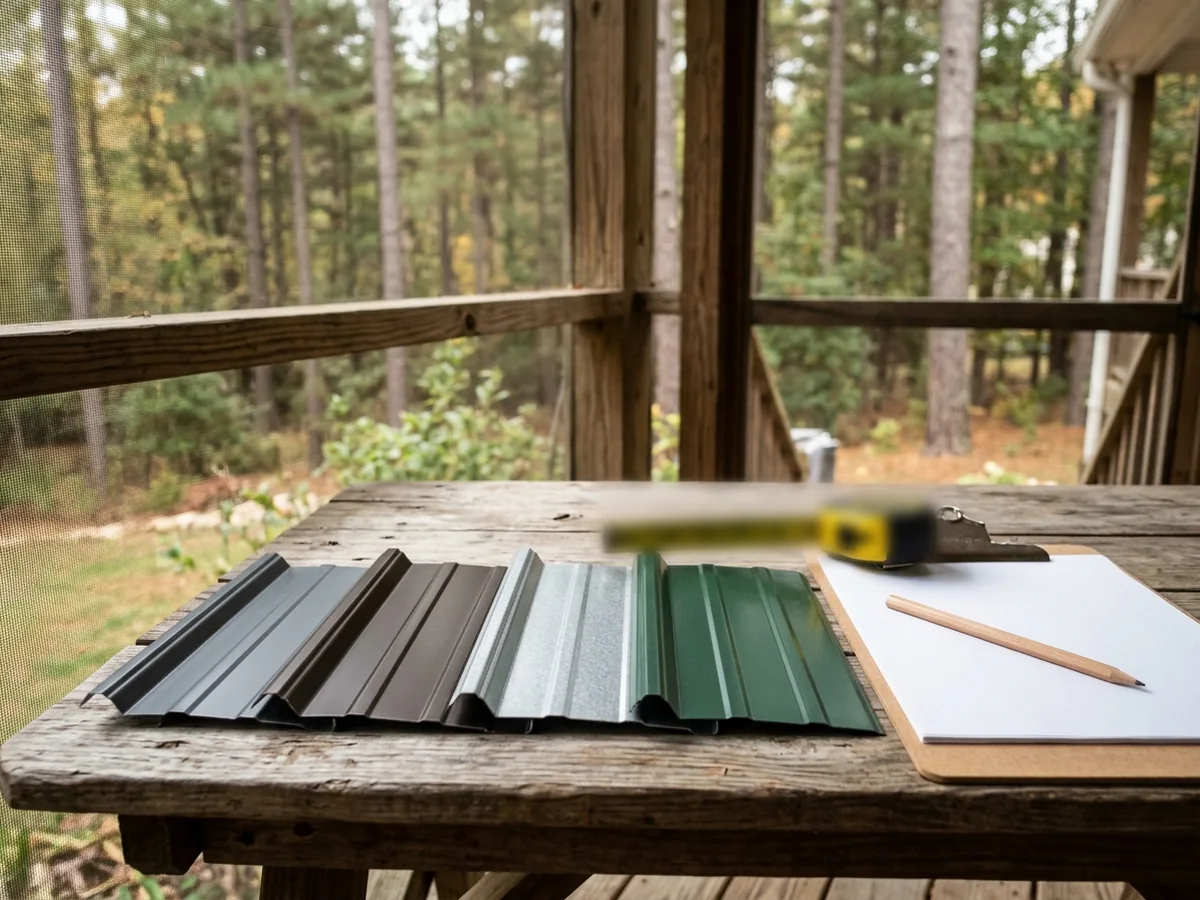
29, 26 and 24 Gauge
Gauge numbers run backward: the higher the number, the thinner the steel. Each gauge is a range, not one thickness. A 26-gauge panel can measure anywhere from 0.0179 to 0.0217 inch, so two "26-gauge" bids can differ in actual steel. Most residential roofing is 24 or 26 gauge. Twenty-nine gauge is common on sheds and small barns. One panel maker puts 26 gauge at about 15% more than 29 in the same profile. A 29-gauge panel can carry the same UL impact rating as a 26-gauge one, but it dents more easily. Flashing at walls and slope changes must be at least 0.019 inch under the code, about the thickness of 26-gauge galvanized.
Cool-Roof Colors
A "cool" metal roof comes from reflective pigments, and a light color is only part of it. The Cool Roof Rating Council rates roofing for solar reflectance, the share of sunlight bounced off, and thermal emittance. Cool products come in colors ranging from white to black. ENERGY STAR stopped certifying roof products in June 2022, so ask for the color's CRRC-rated solar reflectance instead of an ENERGY STAR label.
Why Columbia homeowners call Columbia Metal Roofs
- A free on-site measure and a written quote
- Panel type, steel gauge and paint system spelled out before you sign
- Ask who pulls the roofing permit: it goes in the scope
- Your request goes to one independent metal roofer, not a list
- No fee to the property owner for the referral
Galvalume Metal Roof Heat and Color in a Columbia Summer
July's normal high at the airport sits near 93°F, so color is not a cosmetic choice on a Columbia roof. ENERGY STAR cites Lawrence Berkeley lab work: on a typical summer afternoon, a clean white roof that reflects 80% of sunlight stays about 50°F cooler than a gray roof reflecting 20%. The U.S. Department of Energy says a cool roof can cut a single-story building's yearly air-conditioning energy by up to 15% in warm climates.
That doesn't mean everyone needs a white roof. Many PVDF paint lines add solar-reflective pigments, so a mid-gray or tan with cool pigments can reflect more than the same shade made without them. To compare, use the CRRC numbers for each color. Ask for the aged value too. That's the reflectance after three years outdoors, and it's typically lower than the figure on a new panel.
Galvalume Metal Roof Prices by Coating and Gauge
National cost guides price Galvalume steel at $1.00 to $4.50 per square foot for material alone. Installed, a Galvalume standing seam roof runs about $800 to $1,300 per roofing square (100 square feet), and a Galvalume corrugated roof about $500 to $1,000 per square. Gauge moves the material price: about $1 to $3 per square foot for 29 gauge, $1.50 to $5 for 26 and $3 to $7 for 24. For whole-project ranges, tear-off and deck repair, see metal roof installation.
Galvalume Metal Roof Spec Lines Worth Reading
Bids for "Galvalume" can describe very different panels. Check that each bid names:
Coating designation
AZ50 or AZ55 under ASTM A792, not "galvalume-type" or "zinc-aluminum."Measured thickness
The decimal thickness or the maker's spec sheet, not only the gauge number.Paint resin and coater
PVDF or SMP, the coil coater's name, and the finish warranty terms as that coater publishes them.Solar reflectance
The CRRC initial and aged values for the color you picked.Trim gauge
Flashing and trim at least as thick as the code minimum, ideally matching the panels.Fasteners
Galvanized or stainless fasteners meant for steel roofs, with the panel maker's washers.Separation from other metals
No copper or lead flashing touching or draining onto the panels. See copper roofing for why.