
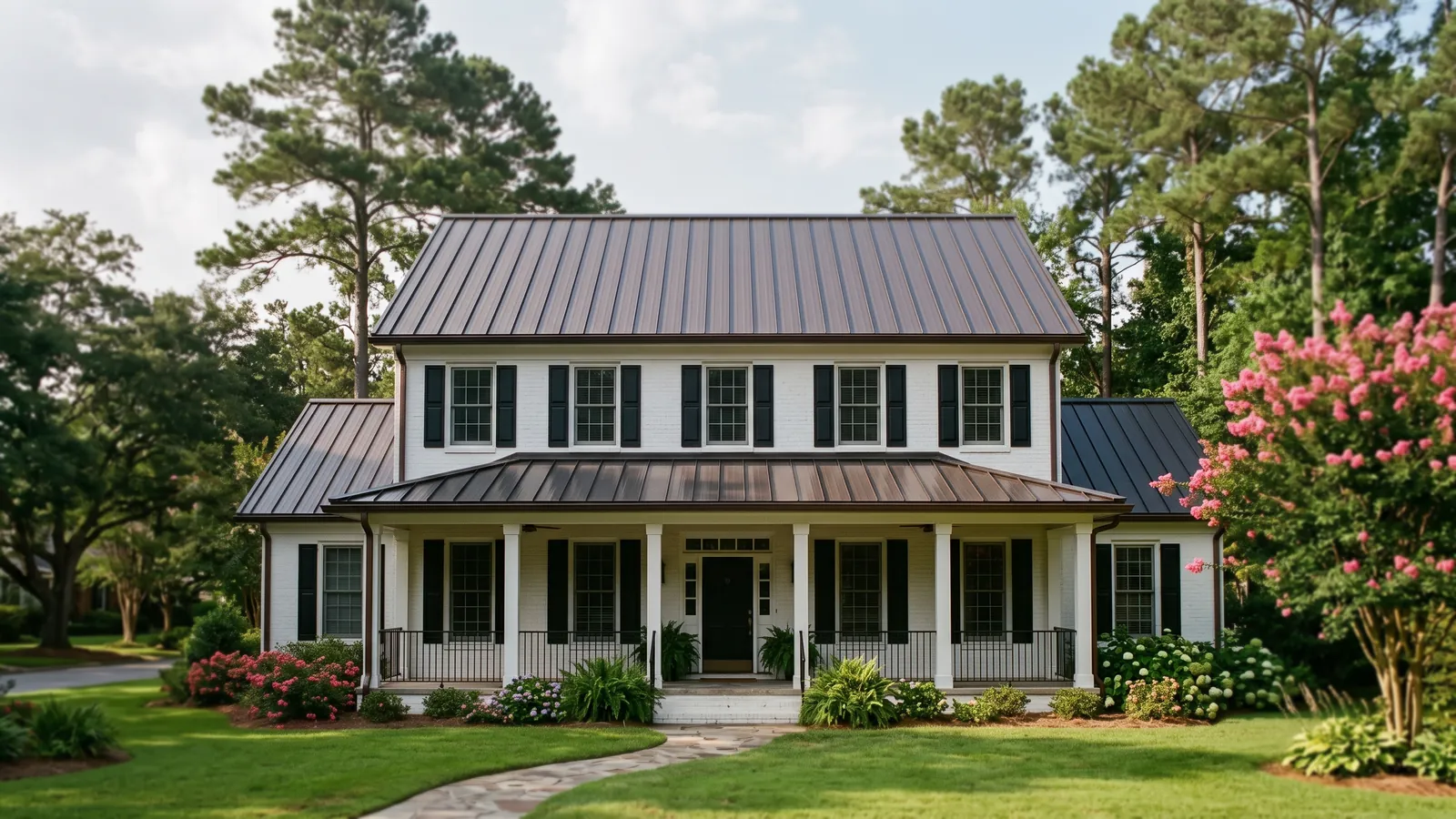
Metal Roof Coating and Painting Options, From Primer to Topcoat
The steps below follow a typical exposed-fastener roof (R-panel or corrugated steel on a house, shop, barn or porch), in the order a crew does them.
Rust Treatment and Primer
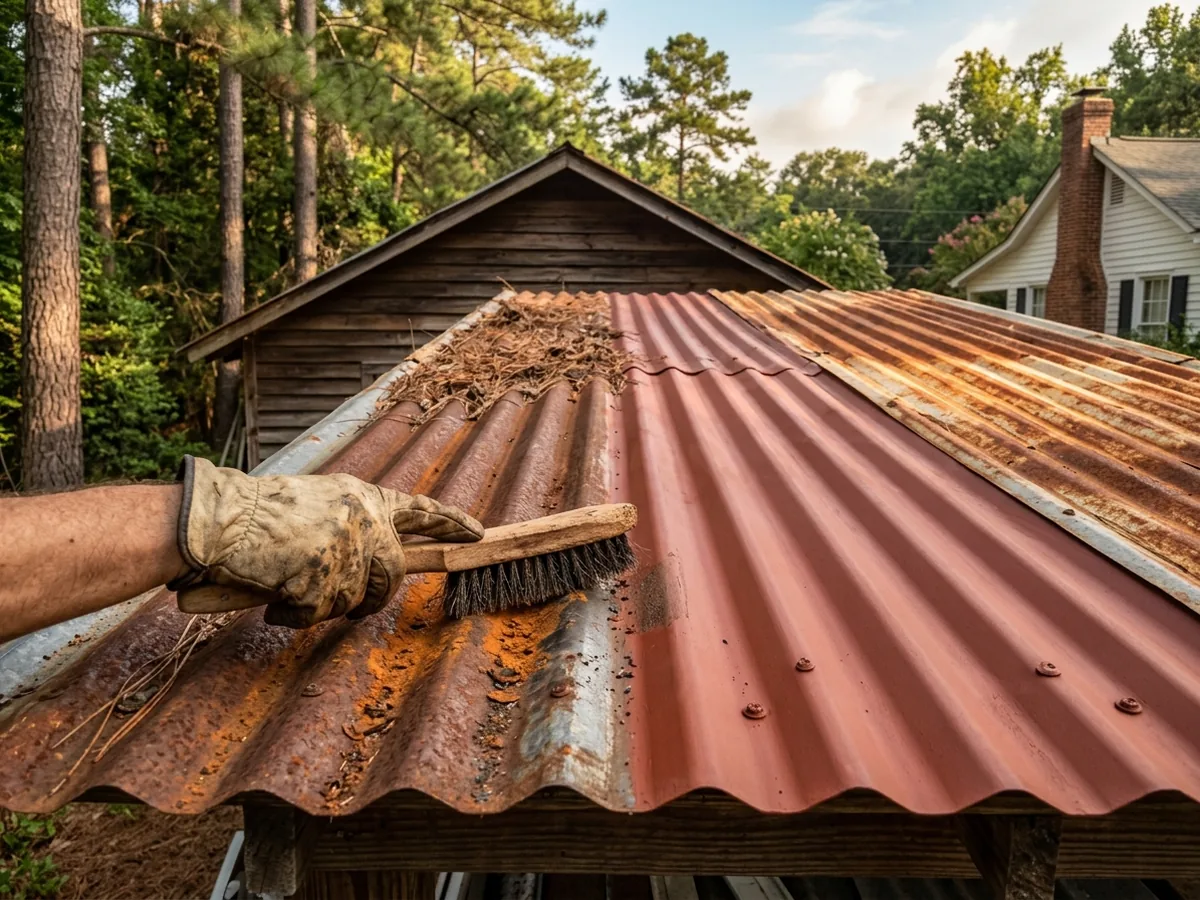
Gaco's restoration spec for aged metal roofs has panels with moderate to heavy oxidation cleaned or lightly abraded to take off loose rust, then treated with a rust-inhibiting primer to stop the corrosion spreading. Some crews use a rust converter instead. Converters based on tannic and phosphoric acid react with rust that can't be fully removed and turn it into iron phosphates and tannates that paint can bond to. A study in Corrosion Science found the converter did harm on rust heavily contaminated with chloride salts. Ask which product goes on the rusted areas and why, and how much rust will be taken off first.
Seam and Fastener Sealing Before Coating
Coating over a loose screw just paints the leak. GAF's five-step silicone-over-metal sheet has the crew secure or replace loose and missing fasteners first. Horizontal seams, ridges and rake edges get brushed mastic at 60 mils wet (1/16 inch), and stitch screws go in wherever a lap gap is wider than 1/8 inch. Every fastener head is then encapsulated. On R-panel, the vertical seams get a 3-inch band at 20 wet mils. Typical standing seam profiles don't need the seam step at all. Gaco's spec replaces stripped or corroded screws, and screws with rotted neoprene washers, with oversize screws. For how often exposed-fastener roofs need re-screwing anyway, see corrugated metal roofing.
Silicone Roof Coating
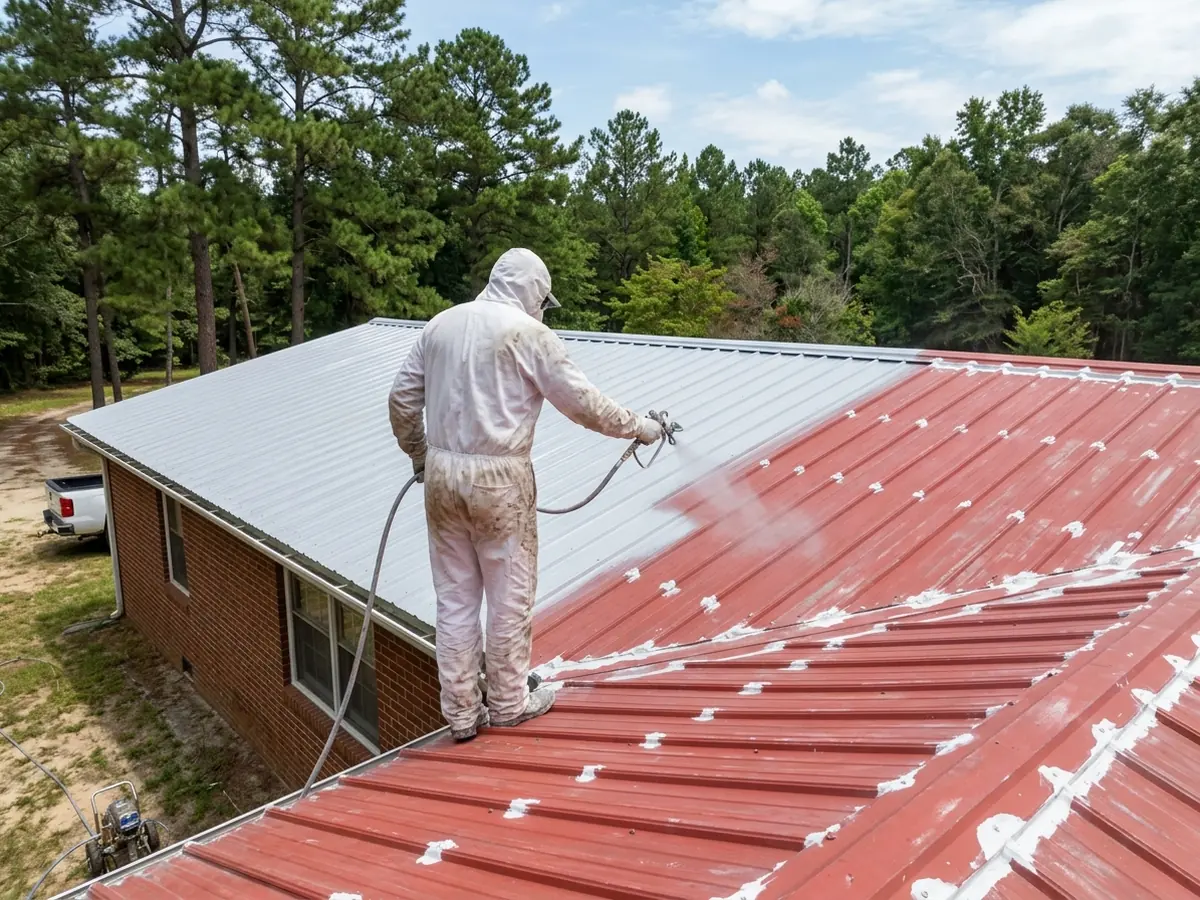
KARNAK describes silicone as a solvent-based coating that holds up where water sits, with a life of 10 to 20 years depending on thickness and climate. The downsides are that it picks up dirt, which dulls its reflectivity, and once a roof is silicone, only silicone will stick to it at the next recoat. Gaco's silicone spec also limits what it goes over. Bare steel has to have weathered at least a year (or galvanized steel must be treated), and factory finishes that are siliconized or fluorocarbon (PVDF) are excluded.
Acrylic Elastomeric Coating
Acrylic is water-based, cleans up with water and recoats easily, since new acrylic bonds to old. KARNAK gives it 10 to 15 years and calls it a poor fit for ponding water. On a sloped house roof, water runs off rather than ponding, so that weakness matters less. Silicone can go over acrylic later, but acrylic can't go over silicone. White acrylic also tends to stay more reflective than silicone. For what reflective colours do to attic heat, see our Galvalume metal roof page. Don't let anyone call a coating "ENERGY STAR rated". That program stopped certifying roof products in 2022.
Repainting a Factory Finish
A painted steel roof that is faded and chalky but not rusted can sometimes be repainted rather than coated. Chalking is the paint's resin breaking down in UV light and leaving a white powder on the surface. That powder has to be washed off, or nothing will stick. The Metal Construction Association warns that field paints are often a different resin from the factory coil coating and weather differently, so a repainted roof may fade faster than the original did. On PVDF finishes, ask for an adhesion test patch before anyone quotes a full repaint.
Why Columbia homeowners call Columbia Metal Roofs
- A free on-site measure and a written quote
- Panel type, steel gauge and paint system spelled out before you sign
- Ask who pulls the roofing permit: it goes in the scope
- Your request goes to one independent metal roofer, not a list
- No fee to the property owner for the referral
Metal Roof Coating: Which Roofs Qualify
Coating specs set limits on what they'll go over. Gaco restricts its system to panels "in sound condition" and wants a slope of at least 2:12 so water drains. GAF's first step is to qualify the roof: clean, dry and tight, with an adhesion test before coating. That leaves three groups:
Good candidates
Surface rust, chalked paint, leaking screws and lap seams on panels that are still whole.Borderline
Patches of deep rust on otherwise good panels. Those panels may need replacing before the rest is coated, so ask for a price both ways.Not candidates
Rust holes through the steel, panels torn or lifted by wind, or a soft deck. That is metal roof replacement, and no coating will fix it.
Metal Roof Coating in Columbia Weather
Coatings are fussy about the day they go on. Gaco wants the air above 40°F and at least 5°F above the dew point and rising. KARNAK says acrylic shouldn't go down if rain is expected within 24 hours. Columbia's summer makes both hard: July is the wettest month at the airport, with a 5.35-inch normal, and statewide South Carolina sees 45 to 70 thunderstorm days a year. Mornings that start with dew on the panels push the start time back. Ask the roofer how they will handle the weather. A good one will watch the forecast, coat in sections and check the surface for dew before spraying.
Metal Roof Coating Quote: What to Get in Writing
Products
Primer, mastic and topcoat by name, with the maker's data sheets.Thickness
Wet or dry mils for the topcoat, and how the crew will measure them (GAF has crews check wet mil thickness as they go).Fasteners
Retighten, replace with oversize screws, or both, and roughly how many.Seams
Which seams get mastic, and at what width and thickness.Cleaning
Pressure wash, cleaner, and treatment for mildew or algae on shaded slopes.Adhesion test
Where it was done and the result.Manufacturer terms
If a coating maker publishes a warranty for the system, ask for the document and what it requires of the installer.
Ask about the second coat too, since a coated roof gets recoated rather than replaced. KARNAK's guidance is that acrylic recoats after a pressure wash and patching of worn spots. Aged silicone needs a much more thorough clean, sometimes with a solvent such as denatured alcohol, before new silicone will bond. That difference shows up in the price of the next recoat.