
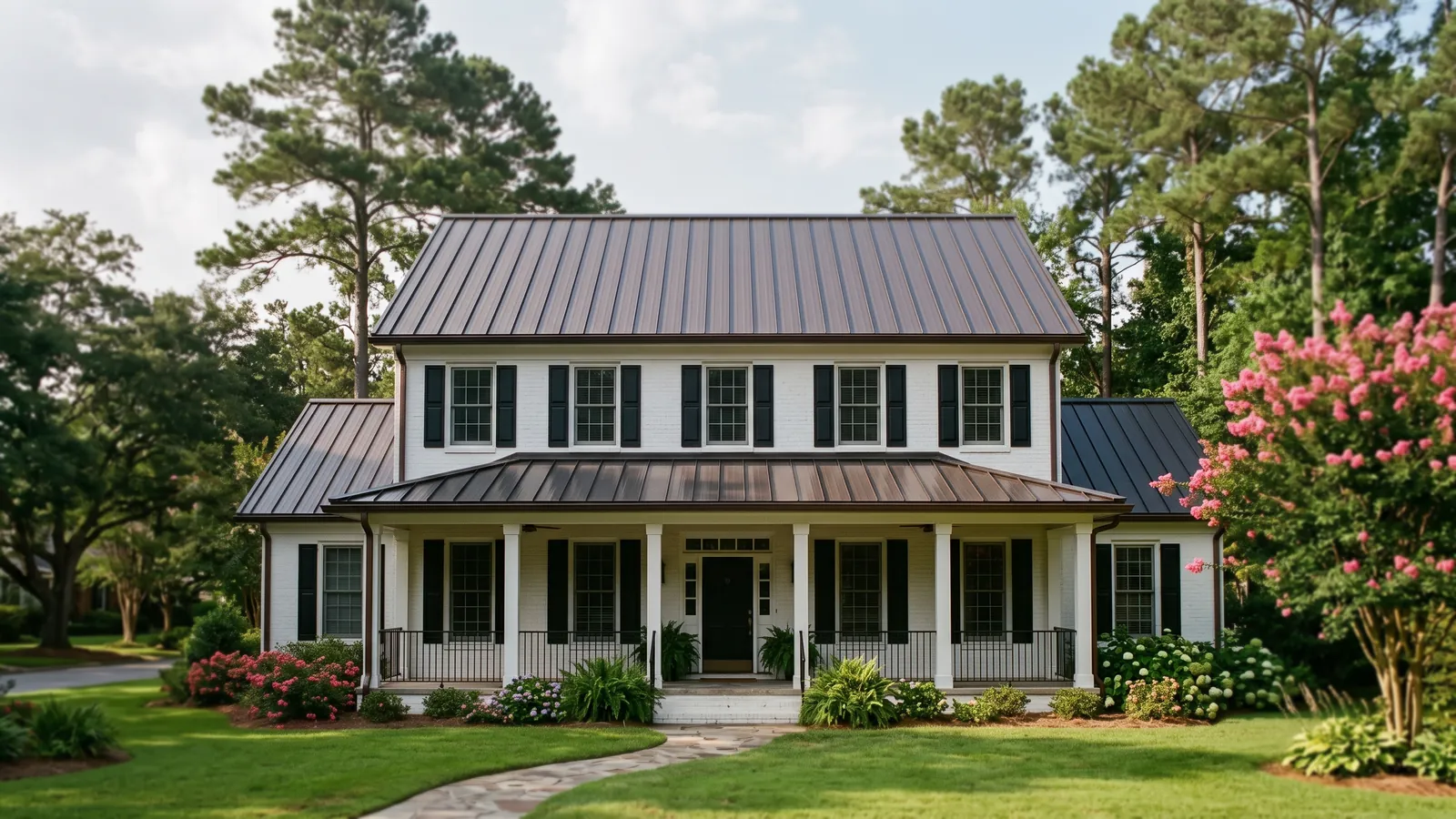
Metal Roof Installation on a Shingle House, Stage by Stage
This page covers the most common version of the job: a worn asphalt roof comes off and a first metal roof goes on. Taking off an old metal roof is a different job, covered on metal roof replacement. Leaving the shingles in place is covered on metal roof over shingles.
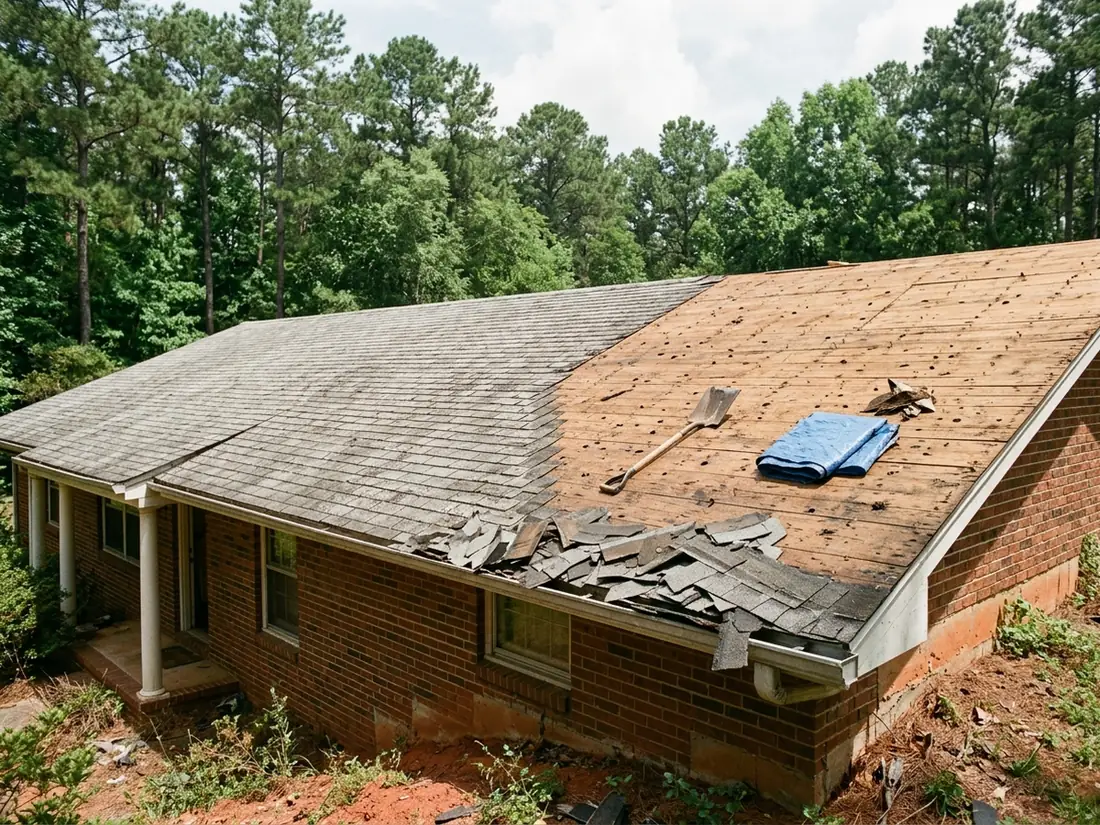
Shingle Tear-Off to the Deck
Tear-off removes the shingles, the old felt, the nails, the drip edge and the pipe boots, down to bare sheathing. HomeGuide's national figure for removing an existing roof is $1 to $3 per square foot. On a 2,000-square-foot roof that adds $2,000 to $6,000 before any metal goes on. It's also the only way to see the deck. Ask how many layers the roofer expects to find and whether the price covers all of them.
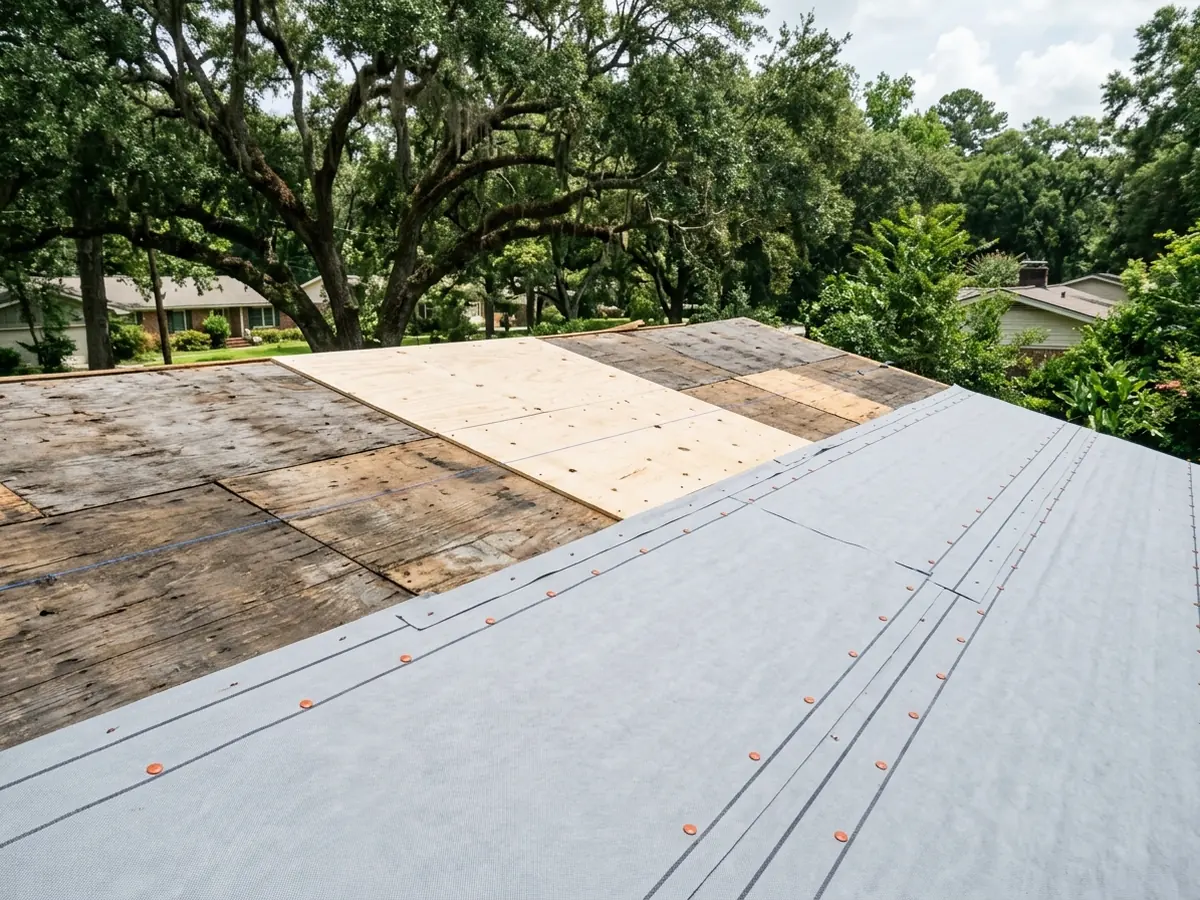
Deck Repair and High-Temperature Underlayment
With the shingles gone, soft, delaminated or rotted sheathing shows up, often around old leaks, valleys and the eaves. HomeGuide puts deck replacement at $2 to $5 per square foot. Nobody knows the sheet count until tear-off, so ask for a per-sheet price for new plywood or OSB written into the quote.
Underlayment goes on next. Under metal panels, the state's residential code defers to the panel manufacturer's underlayment instructions, except where wind design applies. There it names ASTM D226 Type II felt or ASTM D4869 Type III or IV. Heat matters too. Polyguard, an underlayment manufacturer, says ordinary felt and synthetic underlayments break down under a metal roof's heat and movement, and rates its high-temperature membrane to 260°F. Ask for the product name and its temperature rating.
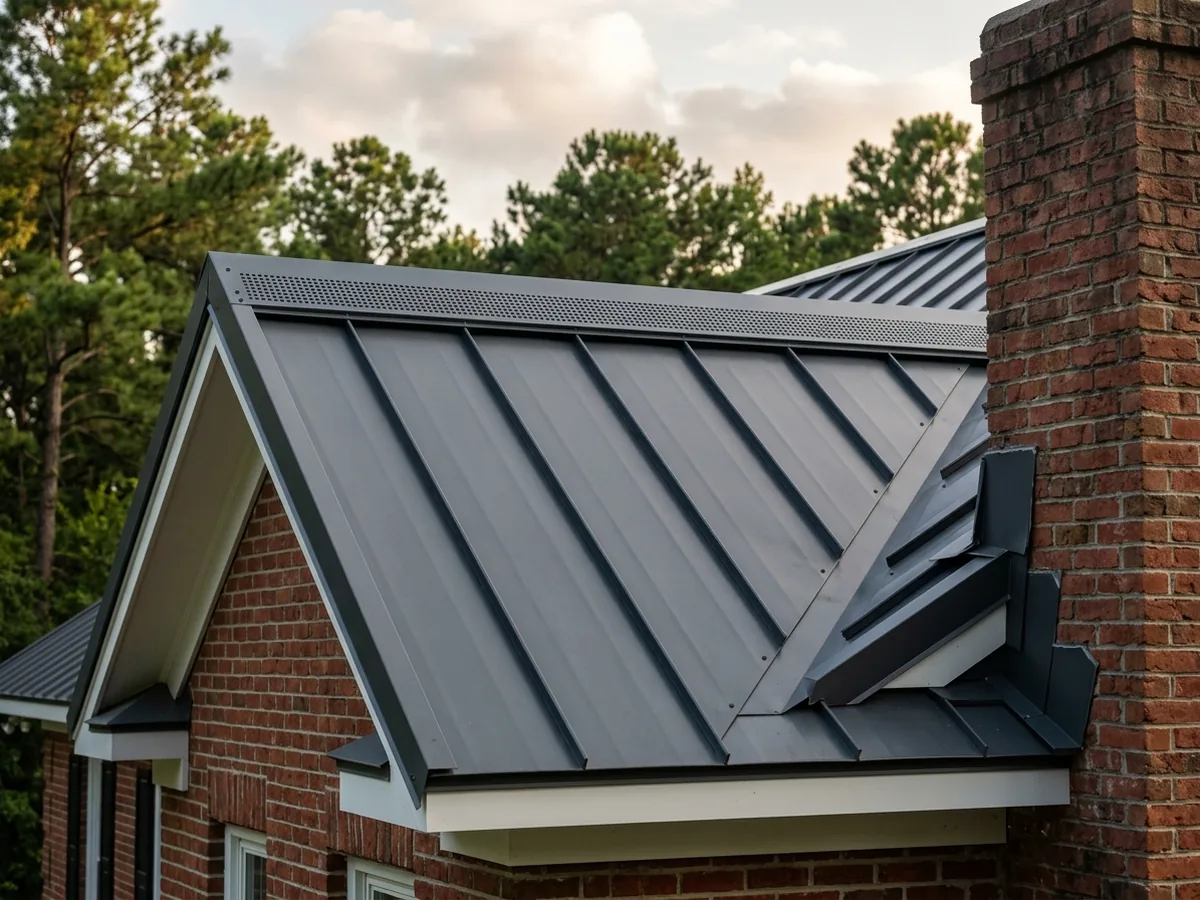
Drip Edge, Flashing and Ridge Vent
Trim is where the roof meets everything that isn't roof, so look at this part of the quote closely. Expect drip edge at eaves and rakes, valley metal, sidewall and headwall flashing where the roof meets brick or siding, chimney flashing, new pipe boots, and a ridge cap over a vented ridge with closures that keep out wind-driven rain. On a metal roof these pieces are bent from the same metal and paint as the panels. Ask the roofer which ones are custom-bent and which come from stock.
Matching the Panel to the House
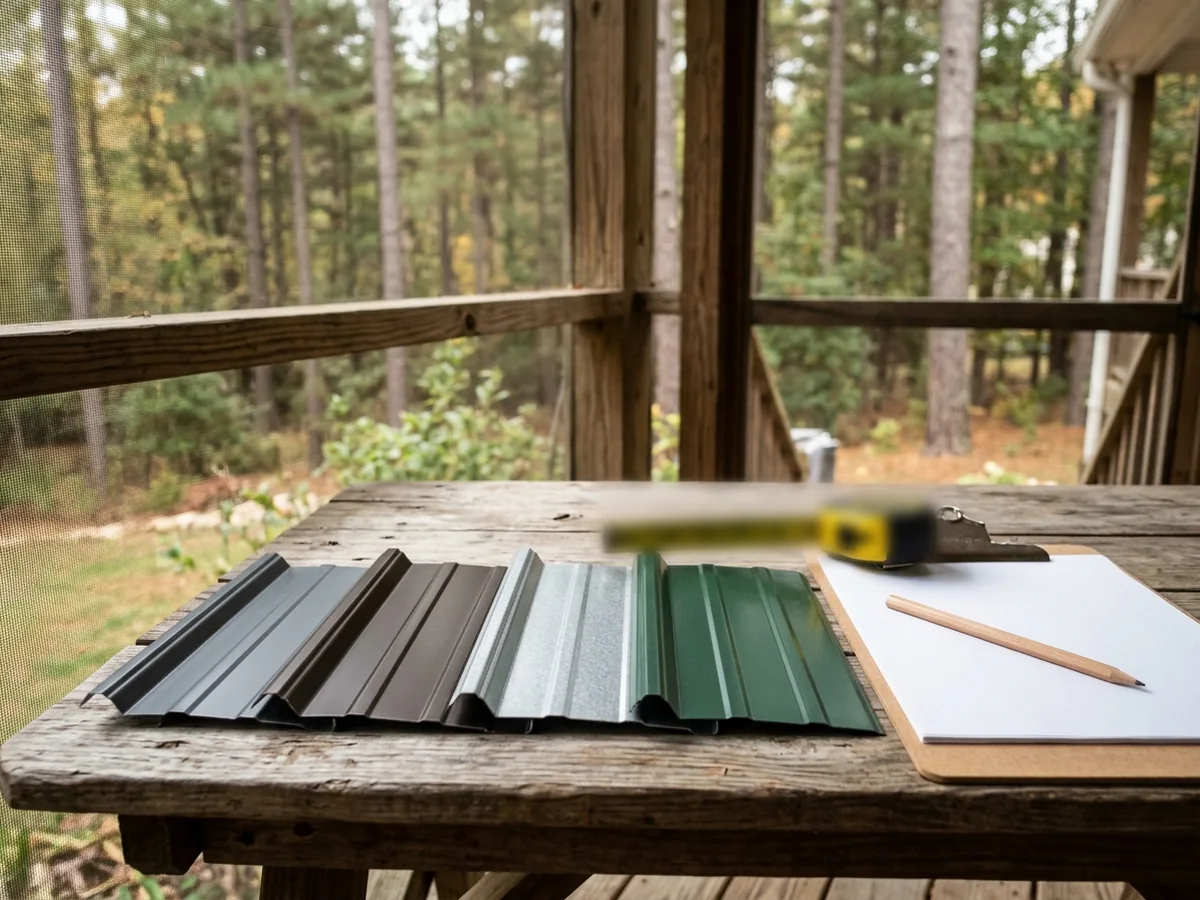
Standing seam has no screws through the face and the longest life. Metal shingles read as asphalt, slate or shake from the street. Corrugated and ribbed panels cost the least and need fastener upkeep. The roof itself narrows the choice: HomeGuide notes that pitches steeper than 6:12 take more labor, equipment and safety gear, whatever the panel.
Scheduling Around Summer Storms
Columbia gets 45.24 inches of rain in a normal year, and July is the wettest month at 5.35 inches. The state climatology office counts 45 to 70 thunderstorm days a year across South Carolina. Ask how much roof will be open at once and how the crew dries it in when a storm builds on a July afternoon.
Why Columbia homeowners call Columbia Metal Roofs
- A free on-site measure and a written quote
- Panel type, steel gauge and paint system spelled out before you sign
- Ask who pulls the roofing permit: it goes in the scope
- Your request goes to one independent metal roofer, not a list
- No fee to the property owner for the referral
Metal Roof Installation Cost: National Ranges and Add-Ons
In HomeGuide's 2026 numbers, metal runs $5 to $16 a square foot installed, and $4 to $8 of each square foot is labor. Angi's job data tells the same story from another angle: an $11,764 average, with most projects between $6,043 and $18,340. We haven't found a published price for Columbia alone. Prices for each panel type are on that type's page.
On top of the panel price, three things move a shingle-to-metal quote the most:
Tear-off
$1 to $3 per square foot nationally, more with extra layers.Deck repair
$2 to $5 per square foot of replaced sheathing.Pitch and shape
Steep roofs over 6:12, valleys, dormers and chimneys add labor and trim.
Set that against the life of the roof. By the Metal Roofing Alliance's count, asphalt gets 12 to 20 years and metal 30 to 50 or more, helped by the fact that worn metal can be repainted. On a house you plan to keep, that gap usually decides it.
Metal Roof Installation Permits and Contractor Registration in Columbia
Within the city, re-roofing permits come from Planning & Development Services. The form wants a state license number for the contractor and a dollar value for the job, and its job-type checkboxes only mention shingles, so ask your roofer how they'll file a metal roof. Contractors can file and pay through the city's online Access portal. Expect extra review if the house falls in a design, historic or flood district. In unincorporated Richland County, the Building Permitting office says owners should call to confirm whether a project needs a permit.
The 2021 South Carolina Residential Code has applied since January 1, 2023, and the 2024 edition takes over on January 1, 2027.
State law treats roofers as residential specialty contractors on any home job over $500 (S.C. Code § 40-59-20). They register with the South Carolina Residential Builders Commission under a Roofing classification, and a $5,000 surety bond is required once a project tops $5,000. Ask for the registration number and look it up with SC LLR before you sign.
Metal Roof Installation and Attic Moisture in a Humid Climate
Columbia's climate is humid subtropical, and damp summer air in the attic is what a metal roof has to manage. Classic Metal Roofing Systems, a metal roof manufacturer, says that on a normal house with attic insulation, working ventilation and a roof deck, metal doesn't pose a condensation risk. The problems start when panels go on without decking. It names three defences: insulation with the ceiling air-sealed, ventilation with both intake and exhaust vents, and a vapor barrier.
The code sets the ventilation minimum. Net free vent area must be at least 1/150 of the area of the vented space, or 1/300 when 40 to 50 percent of it sits in the upper attic, no more than 3 feet below the ridge (R806.2). Count the intake as well as the exhaust: a new ridge vent does little if the soffit vents are painted shut or packed with insulation. A good roofer will look at the soffits from inside the attic at the estimate.