
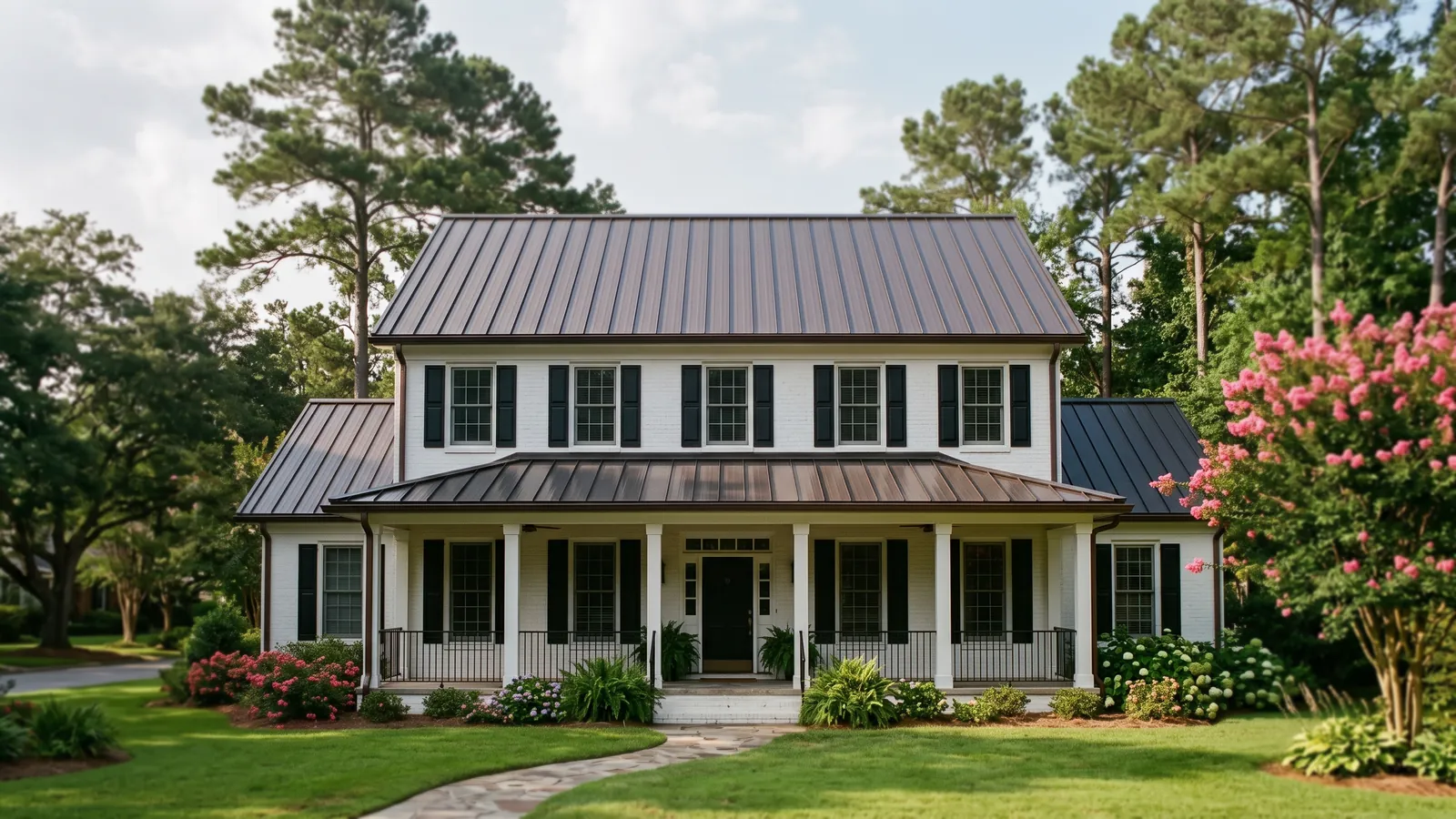
Metal Roof Replacement Options for an Old Metal Roof
This page is about replacing a roof that is already metal. Putting a first metal roof on a shingle house is metal roof installation, and covering shingles without a tear-off is metal roof over shingles.
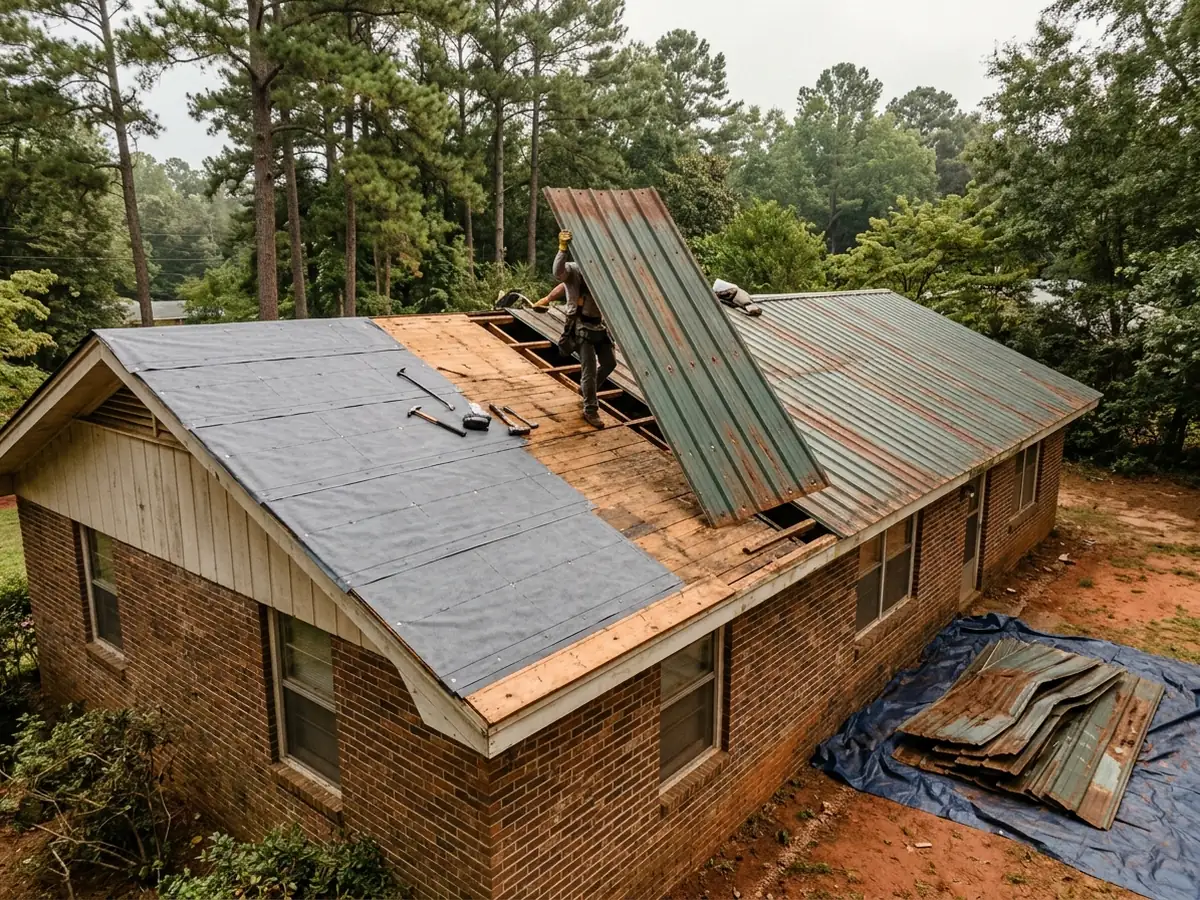
Tear-Off of an Old Metal Roof
A tear-off takes the old panels, screws, trim and underlayment off and leaves bare deck or purlins, which is what the state code means by a replacement. The point of it is to see what the old roof was hiding: soft plywood around a chimney, rusted purlins over a damp porch, or a ridge with no vent at all. Any flashing, edging or vent that is rusted or damaged has to be replaced, not reused (R908.5). Old steel panels go to scrap. The Metal Roofing Alliance notes metal roofs are 100% recyclable, so a tear-off doesn't have to end up in a landfill.
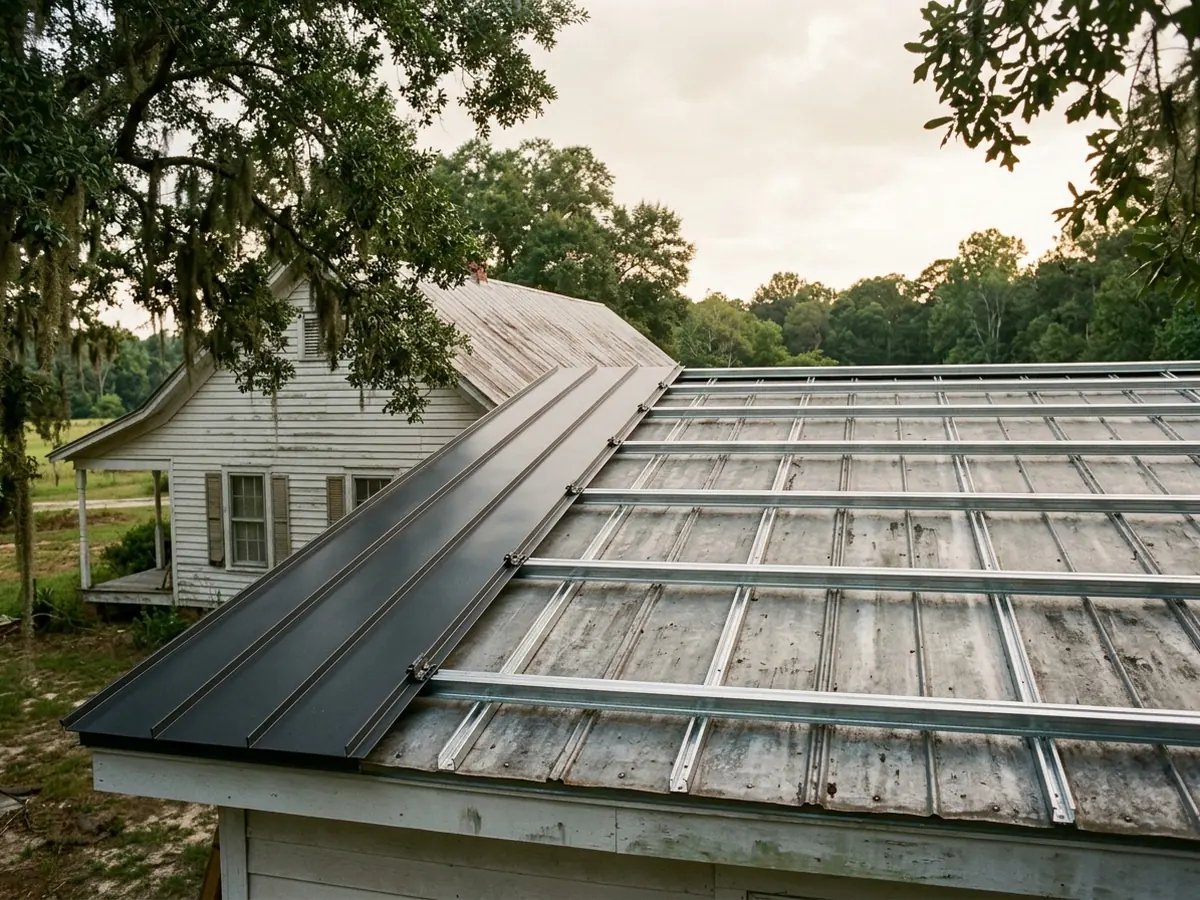
Metal-Over-Metal Retrofit
On some roofs the old metal can stay. The Metal Construction Association (MCA) describes two ways to do it: an overlay that keeps the existing slope, and a retrofit that adds an engineered framing system and can change the slope altogether. Its manual states that codes allow a metal roof over another metal roof, fixed to new purlins of 2x2 or 2x4 lumber, formed steel or pre-notched sub-purlins, often with insulation laid between them. The MCA lists one check before any of it: whether the building can carry another 3 to 5 pounds per square foot of dead load. On a workshop or an older farmhouse with a sound but leaky roof, skipping the tear-off can be the cheaper route.
Partial and Section Replacement
Sometimes only one slope is bad, often the one under a tree or beside a valley. Swapping those panels costs far less than a whole roof, but painted steel fades and chalks in the sun, so new panels rarely match old ones on day one. Ask to see a sample next to the existing roof, and ask whether the profile is still made: rib spacing differs between manufacturers, and a near-match won't lap tightly. Before paying for new panels to fix a leak, have the flashings checked first; our metal roof inspection page lists where leaks usually begin.
Upgrading Exposed-Fastener Panels to Standing Seam
Many owners use a replacement to move from screw-down panels to standing seam, which hides its fasteners under the seam. On a solid plywood deck that is a normal swap. On a building where panels sit on purlins, the MCA warns that screwed-down panels brace the purlins and standing seam does not, so a standing seam roof shouldn't replace a screw-down roof there without a structural check of the purlins. Our standing seam metal roof page covers the clips and seam types, and the low slope metal roof page has the slope minimums for each panel family.
Why Columbia homeowners call Columbia Metal Roofs
- A free on-site measure and a written quote
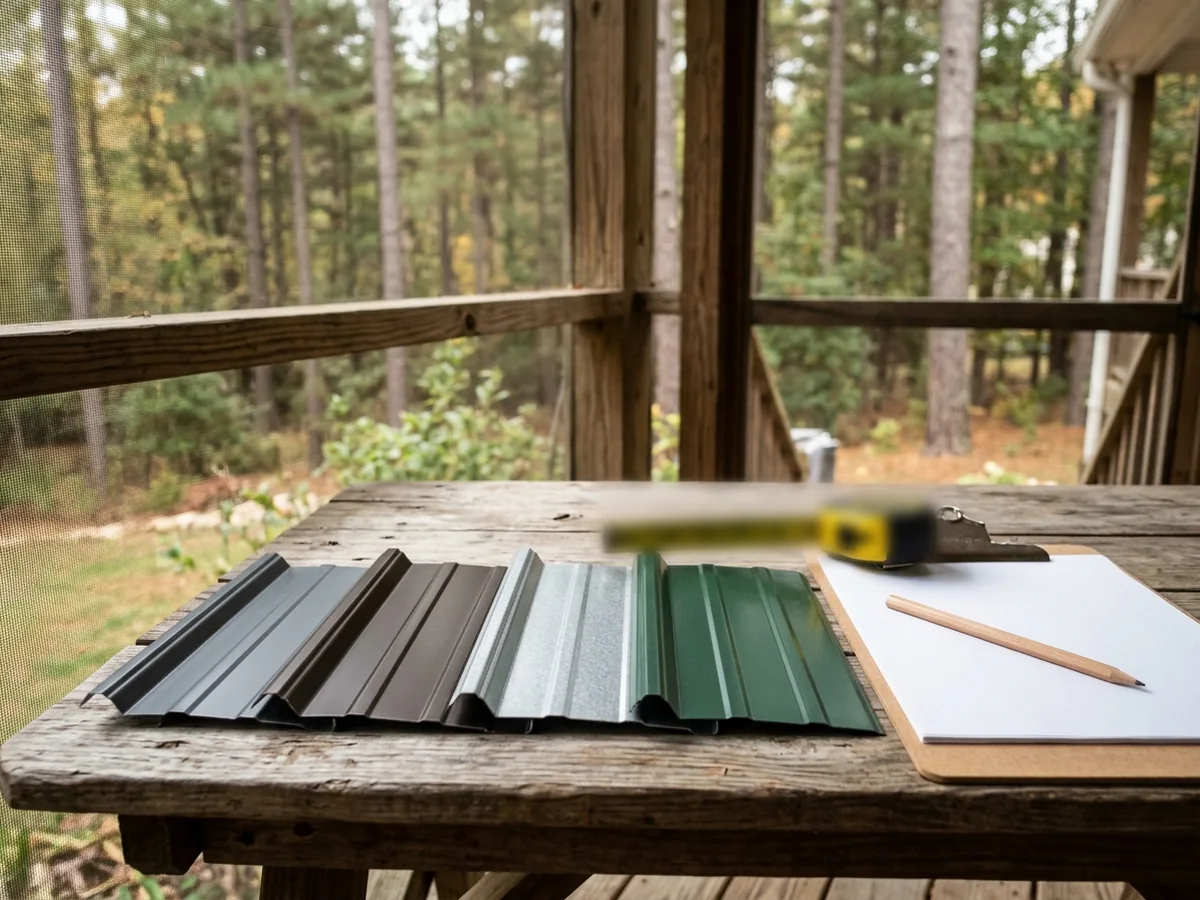
- Panel type, steel gauge and paint system spelled out before you sign
- Ask who pulls the roofing permit: it goes in the scope
- Your request goes to one independent metal roofer, not a list
- No fee to the property owner for the referral
Metal Roof Replacement or Another Coat: Reading the Old Roof
Gaco's specification for restoring aged metal roofs only allows its coating over panels in sound condition. That gives a practical test for an old roof:
Coat it
Surface rust, chalky paint, loose or leaking screws, tired seam sealant. The steel is still whole, so metal roof coating is usually the cheaper fix.Replace it
Rust that has gone through the panel, holes you can see daylight through from the attic, panels bent or torn by wind, or a deck that flexes underfoot.Look underneath
Wet stains on rafters, a musty attic or rotted fascia mean water has been getting in for a while. A good roofer will check from the attic as well as from the roof before saying which side of the line you're on.
If an old roof has already been covered once, ask how many layers are up there before you price an overlay. The over-shingles page linked at the top explains when the state code stops a recover and asks for a full tear-off.
Metal Roof Replacement Scope, Line by Line
A replacement quote should read like a plan. Ask for these in writing:
Tear-off or overlay
Which one, and why. For an overlay, the purlin type and spacing.Deck and purlins
How much rotten decking or rusted framing the price allows for, and the rate for more.Panel, gauge and finish
The profile name, gauge and paint system. Our Galvalume metal roof page explains gauge numbers and PVDF versus SMP paint.Fastening
Clips and their spacing for standing seam, or screw type and pattern for exposed-fastener panels.Flashing and trim
New drip edge, ridge, rake, valley and wall flashing, with pipe boots listed.Haul-off
Who removes the old steel and where it goes.Permit
Who pulls it. The installation page linked at the top covers the permit and the state licensing rule.
If an item is missing, ask before you sign. A missing line usually turns into a change order later.
Metal Roof Replacement, Start to Finish
STEP 01
Look and measure
The roofer walks the roof, checks the attic and photographs problem spots.STEP 02
Written scope
Tear-off or overlay, panel, gauge, colour, flashing and allowances, as listed above.STEP 03
Permit and order
Panels are often cut to length for each run, so the order waits for final measurements.STEP 04
Strip one section at a time
On a tear-off, ask the crew to open only as much roof as they can dry-in the same day. July is Columbia's wettest month on average, and afternoon storms don't wait.STEP 05
Repair and dry-in
Bad decking or purlins are replaced, then underlayment goes down.STEP 06
Panels, trim and flashing
Ridge and wall flashings go on last.STEP 07
Walk-through
Check the gutters for screws and metal shavings left behind and ask for the paperwork: panel make and colour, plus the permit sign-off.