
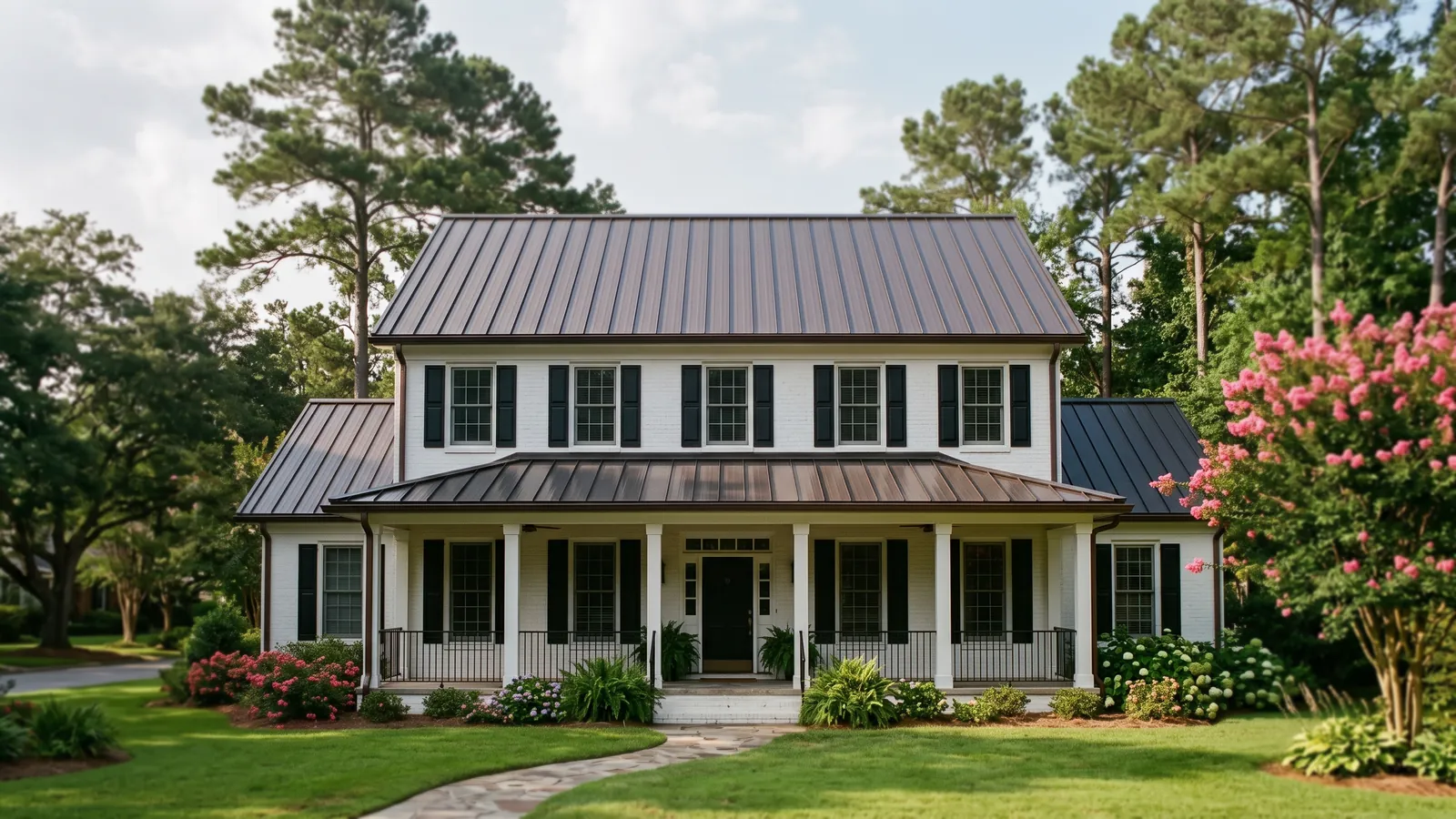
Metal Shingle Profiles: Asphalt, Slate, Shake and Tile Looks
Every profile below works the same way. Small interlocking pieces of metal are pressed into the shape of another roofing material and fastened through hidden flanges. The difference is the look and, to a degree, the metal.
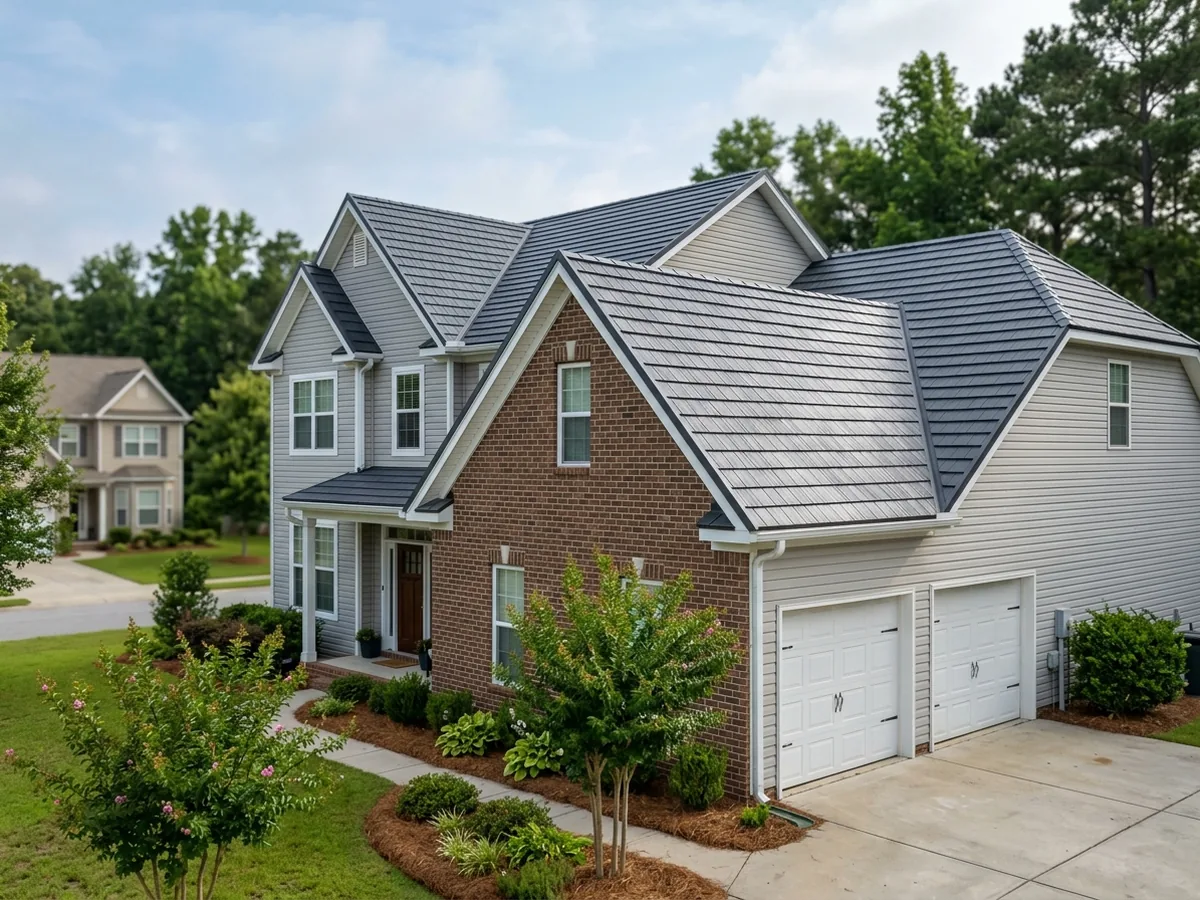
Shingle-Look Steel
This is the profile most people mean when they say "metal shingles." Custom Bilt Metals, for one, makes its steel shingle systems from G90 galvanized steel with four-way interlocking panels, concealed fasteners and Kynar 500 PVDF paint. From the curb it reads as dimensional asphalt. It suits a street full of shingle roofs where a ribbed panel would stand out, or neighborhood covenants that call for a shingle appearance.
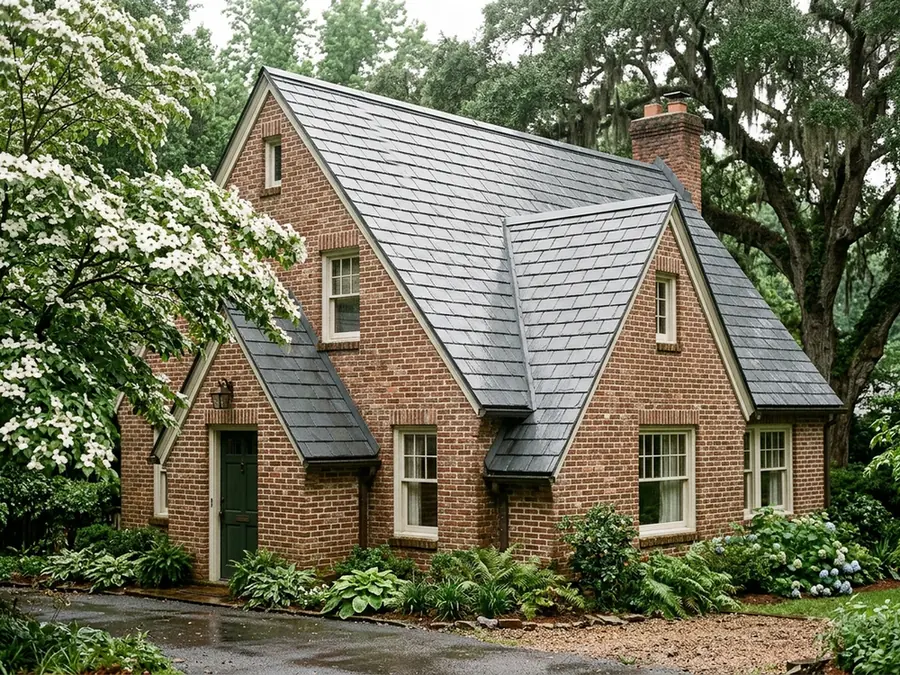
Slate-Look Metal
Slate-look pieces are flat and rectangular, with edges pressed to copy split stone, usually in grey, black or a blended color. HomeGuide calls metal slate a cheaper, lighter stand-in for natural slate, typically made of steel, at $600 to $1,400 per square installed. On a steep Tudor or cottage roof it gives the slate look without asking the framing to carry stone.
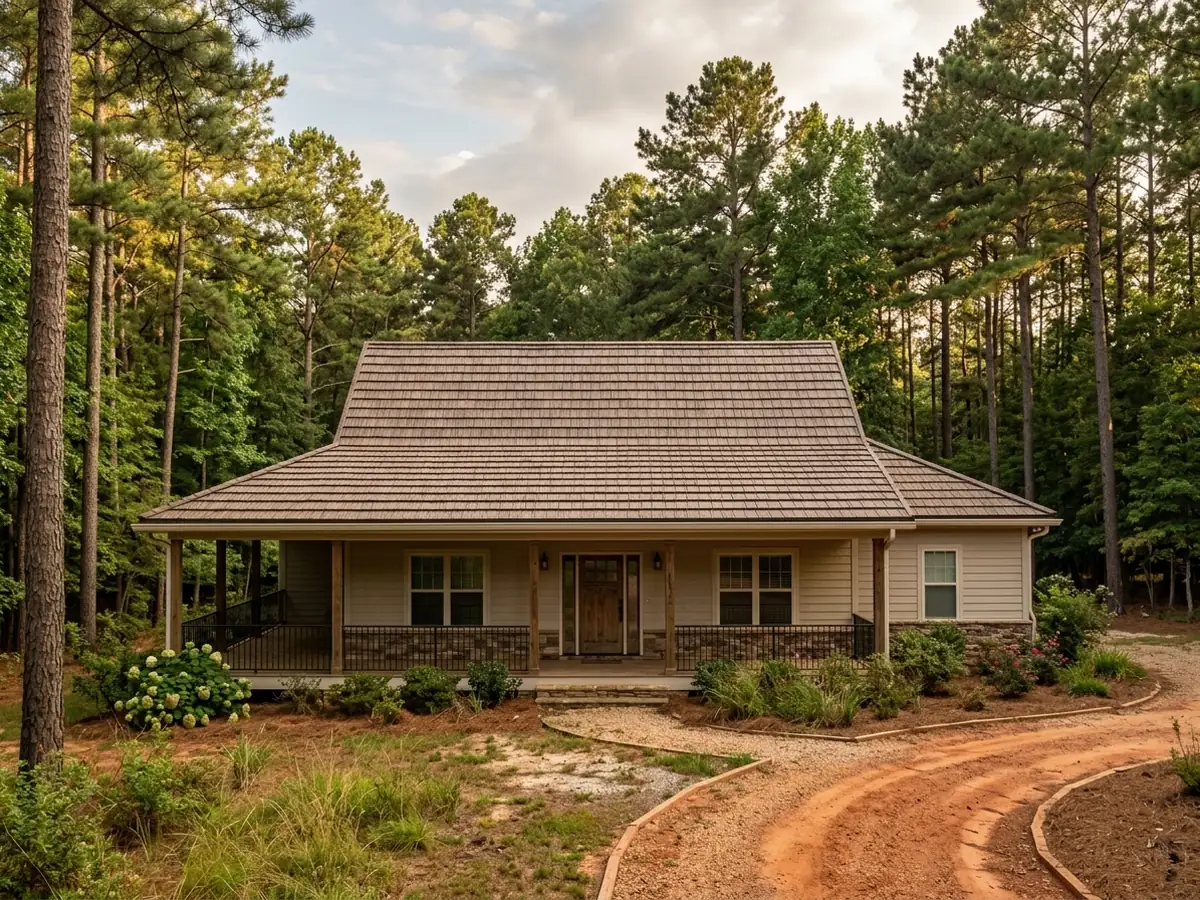
Shake-Look Metal
Shake profiles are pressed with wood grain and deep shadow lines. EDCO sells a textured steel shake made to look like wood "without the sheen," and Custom Bilt's aluminum shake copies hand-split cedar with four-way interlocking panels. It fits Craftsman bungalows and rustic ranches that were built to wear wood. Stone-coated steel shake, with bonded granules, is a separate product covered on our stone-coated steel roofing page.
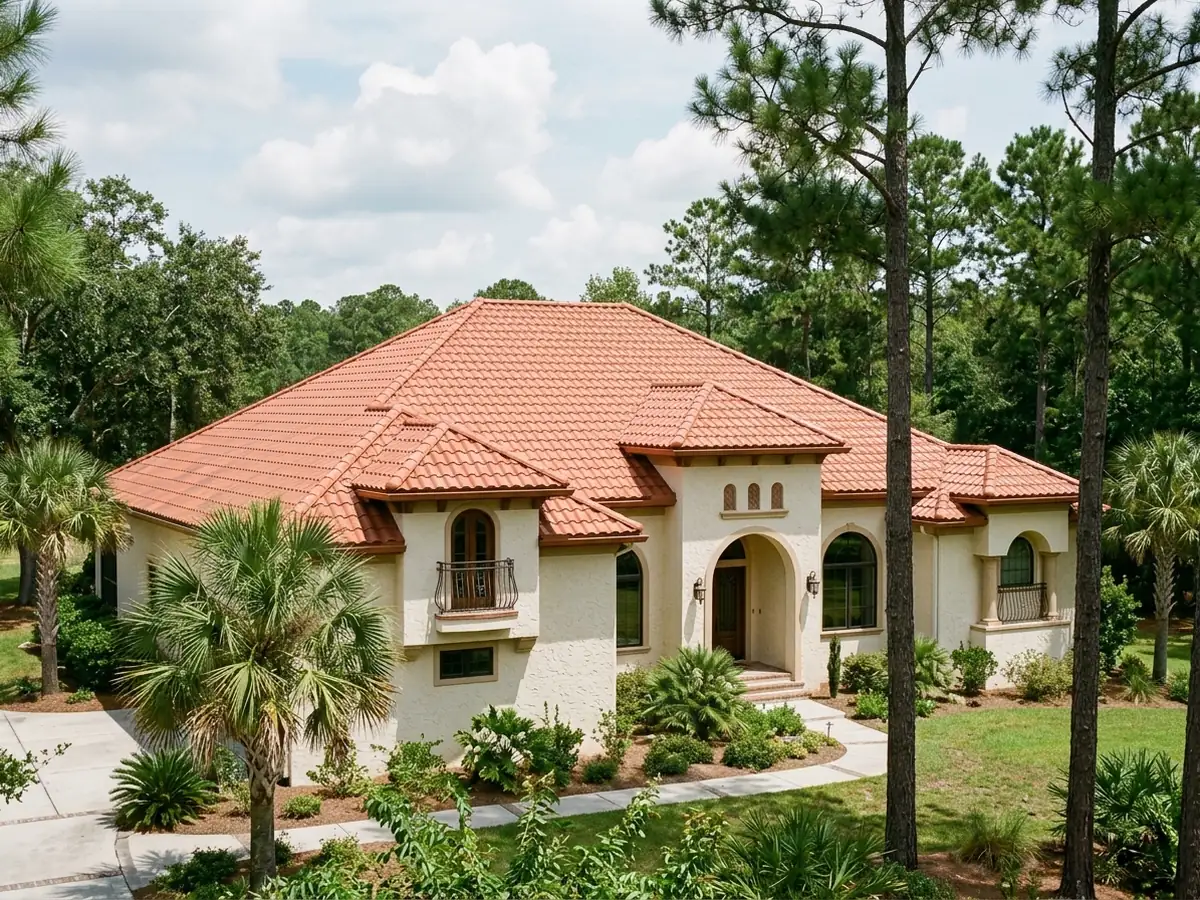
Spanish and Barrel Tile Profiles
Metal tile is pressed into the rolling curve of clay barrel tile. ProVia builds its barrel tile from 26-gauge G90 galvanized steel and says it is light enough to skip the extra structural support clay tile often needs. That makes it an option for a Mediterranean-style house whose framing was never sized for real tile.
Aluminum Shingles
Aluminum shingles go where rust is the worry: under trees that keep a roof damp, or on owners who simply want no steel. Custom Bilt's Oxford Shingle is 0.024-inch aluminum in 12-by-60-inch interlocking panels, made from up to 99 percent recycled aluminum and finished in PVDF paint. HomeGuide prices installed aluminum at $700 to $1,700 per square against $500 to $1,300 for Galvalume or galvanized steel. More on the metal itself is on our aluminum roofing page.
Why Columbia homeowners call Columbia Metal Roofs
- A free on-site measure and a written quote
- Panel type, steel gauge and paint system spelled out before you sign
- Ask who pulls the roofing permit: it goes in the scope
- Your request goes to one independent metal roofer, not a list
- No fee to the property owner for the referral
Metal Shingles Under the South Carolina Residential Code
Metal roof shingles have their own section of the code, R905.4, and three parts of it shape a Columbia job.
Slope
No metal roof shingles below 3:12 (R905.4.2). A shallow porch or shed dormer needs a panel roof in a matching color.Deck
A solid or closely fitted deck, unless the shingle is designed for spaced sheathing (R905.4.1). Gapped board decks on older houses get new sheathing first.Wind
South Carolina's state changes send metal shingle wind design to R905.4.4, which accepts ASTM D3161, FM 4474, UL 580 or UL 1897 testing. Ask which test the product passed and for what wind speed. How those tests work is explained on our standing seam metal roof page.
Custom Bilt says its steel shingles are light enough to go over many existing asphalt roofs "where code allows." Whether the code allows it on your roof is covered on metal roof over shingles.
Metal Shingle Installation, Course by Course
A metal shingle roof goes on in small pieces, much like the asphalt it replaces, so it takes longer than long panels. The order of work, and what to check at each stage:
STEP 01
Deck and Underlayment
After tear-off, the roofer replaces soft sheathing and closes any gaps in board decking. The code's underlayment table lists ASTM D226 Type I or II felt, or ASTM D4869 Type I to IV, for metal roof shingles. Ask for the product name.
STEP 02
Starter Strip and Eave Trim
Drip edge goes along the eaves and rakes, then a metal starter strip that the first course hooks into. A crooked starter shows in every course above it.
STEP 03
Interlocking Courses
Each piece locks into the one below and beside it, and the fasteners go through a flange that the next piece covers. No screw heads should be visible in the field of the roof.
STEP 04
Hips, Ridges, Valleys and Walls
Matching hip and ridge caps, open valley metal, and step or counter flashing at walls and chimneys finish the roof. Ask for these in the same metal and paint as the shingles.
Metal Shingles in Columbia's Historic and Conservation Districts
If the house sits in one of Columbia's preservation districts, read that district's guidelines before choosing a profile, because they differ. For new construction in the Earlewood Protection Area, the guidelines accept "pressed metal shingles" as a roofing material, as well as historic-profile standing seam. The Melrose Heights/Oak Lawn guidelines lean toward keeping historic roofing, but say that where the existing roof isn't original it may be kept, replaced accurately, or "treated in a contemporary style," and the review covers only what's visible from the public right-of-way.
A Certificate of Design Approval in Earlewood expires after one calendar year, so don't get one approved long before the roofer is booked. Preservation staff want every project brought to them for a consultation first. Take the product's profile and color sheet to that meeting.
Metal Shingles Price and Hail Performance
HomeGuide's national range for a metal shingle roof is $6 to $14 per square foot installed, or about $9,000 to $35,000 on average. That's below standing seam in the same source and above corrugated panels. Aluminum, deep shake profiles and steep, cut-up roofs push toward the top of the range.
Hail is where metal shingles differ most from panels. InterNACHI's inspector training says metal shingles are damaged more easily than metal panels because they usually rest on the deck only along their edges. Hail that only dents a panel can distort a shingle enough to open its interlocks, which is functional damage. Thicker metal helps, and InterNACHI notes that the arched shape of metal tile resists impact well, though that too depends on the gauge. Ask for the product's impact rating on paper, and see our stone-coated steel roofing page for what the UL 2218 classes mean.